
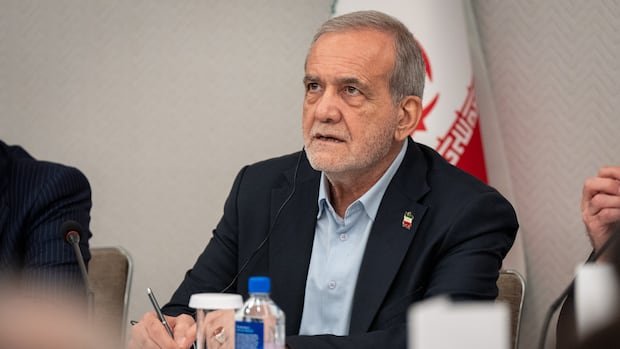

Iran’s leadership is displaying internal divisions over a perceived existential threat, as tensions rise between hardliners and more pragmatic factions regarding President Masoud Pezeshkian’s pledge not to attack Gulf states.
Pezeshkian publicly expressed regret for Iran’s actions affecting neighboring countries and called on them to avoid aligning with U.S.-Israeli aggression against Iran. He dismissed President Trump’s call for Iran’s unconditional surrender as unrealistic but stated that Iran’s leadership had agreed to halt strikes on nearby nations unless attacks originated from their soil. Trump interpreted Iran’s apology as a surrender and warned of severe repercussions.
Upon facing backlash from hardliners within the Revolutionary Guard and clerical elite, Pezeshkian partially retracted his apology. The hardline cleric and lawmaker Hamid Rasai criticized Pezeshkian’s stance as unprofessional and weak, highlighting the internal rift.
The judiciary chief, Ayatollah Gholamhossein Mohseni-Ejei, a member of the temporary leadership council, accused some regional countries of allowing the U.S. to use their territory for attacks on Iran, vowing to continue retaliatory strikes.
The recent death of Supreme Leader Ayatollah Ali Khamenei has exposed long-suppressed divisions within Iran’s ruling elite, exacerbated by external pressure from U.S. and Israeli attacks. The ongoing onslaught poses a significant threat to Iran, prompting the Revolutionary Guards to take a more prominent role in strategic decisions despite the loss of key commanders.
As tensions escalate, senior ayatollahs have called for expediting the appointment of a new supreme leader to counter external threats and maintain national unity. In Iran’s hierarchical system, the supreme leader holds ultimate authority over elected officials and state institutions.
The passing of leadership to an interim council following Khamenei’s death, comprising Pezeshkian and other key figures, has revealed cracks within the ruling structure. Mohseni-Ejei’s remarks contradicting Pezeshkian’s conciliatory tone underscore the growing discord within Iran’s leadership.