
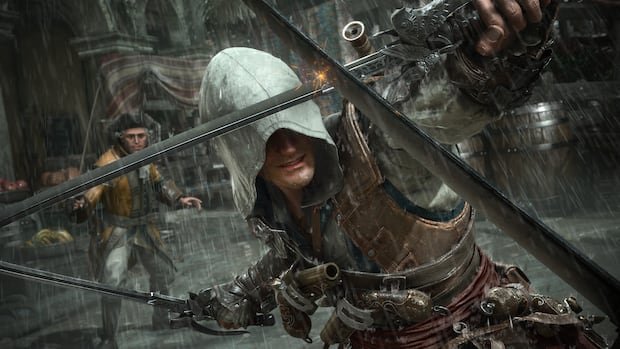

Ubisoft’s decision to remake Assassin’s Creed IV: Black Flag as the initial game in the series receiving a high-quality remake is understandable. Originally launched in 2013, this pirate-themed adventure breathed new life into the franchise following a lackluster third installment, earning praise from critics and gamers alike.
Despite its relatively recent release in gaming terms, Black Flag remains playable on contemporary consoles and PCs, unlike many older titles that have undergone remakes due to the scarcity of their original versions in the market.
The trend of remakes continues to shape the gaming industry, with established properties like Assassin’s Creed and Resident Evil being reimagined for modern audiences due to the perceived risks associated with developing new IPs. However, the question arises whether Assassin’s Creed Black Flag Resynced lives up to the legacy of the beloved original.
The core narrative of the game revolves around Edward Kenway, a former privateer from Wales who transitions into a pirate during the early 1700s, known as the golden age of piracy. Engaging with the pirates’ republic in Nassau, Kenway becomes embroiled in the conflict between the Assassins and Templars, representing freedom and order, respectively.
Technically, Resynced represents a significant advancement over the original Black Flag, constructed using Ubisoft’s Anvil engine, the same technology powering recent entries in the Assassin’s Creed franchise. The visual enhancements are striking, with improved character animations, realistic lighting, and refined combat mechanics.
While Resynced brings notable improvements, certain issues from the original game persist. Combat encounters, particularly during ship takeovers, can feel chaotic and disorienting. Navigating the environment, whether running, climbing, or sailing, can still be cumbersome at times, detracting from the overall gameplay experience.
The narrative structure of Black Flag is both a strength and a weakness, offering a vast open world to explore with multiple story threads that can be pursued in any order. However, this non-linear approach can lead to a fragmented storytelling experience, akin to watching a TV series out of sequence.
Despite some narrative alterations, Resynced introduces new character arcs and side quests that add depth to the overall narrative. The inclusion of fresh storylines and well-developed characters enhances the player’s immersion in the pirate world, offering a mix of familiar faces and new companions.
In conclusion, Assassin’s Creed Black Flag Resynced presents a polished and visually stunning experience, maintaining the essence of the original while incorporating technical improvements. While it may not appeal to newcomers seeking a more streamlined entry point, fans of the series and the pirate genre will appreciate the enhanced gameplay and storytelling.