

As wildfires evacuees in northwestern Ontario gear up to return home, local officials caution residents about significant changes in their communities following the summer. Approximately 624 evacuees from Whitesand First Nation and Armstrong have sought shelter in Thunder Bay since mid-July. These close communities, often viewed as one entity by residents, are situated around 260 kilometers from the city.
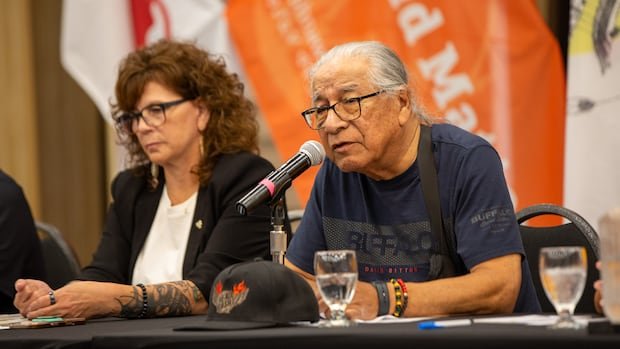
Whitesand’s Chief Lawrence Wanakamik indicated during a virtual news briefing on Friday that the Ministry of Natural Resources is expected to revoke evacuation orders later this week. However, Wanakamik stressed that residents should not rush back immediately upon the orders being lifted. He emphasized the need for Whitesand to ensure the community’s readiness first.
Key services such as water, stores, supplies, internet, and other essentials will be inspected by essential workers before residents are encouraged to return home, Wanakamik explained. The Ministry of Emergency Preparedness and Response (MEPR) reported that as of Monday, over 700 individuals remain displaced out of the initial 2,800-plus evacuees from various northwestern Ontario communities.
MEPR officials highlighted that decisions to lift evacuation orders are made by First Nation community leadership in consultation with the Ministry of Natural Resources. The ministry remains in constant contact with First Nations to provide updates on fire conditions and address inquiries. Changes to evacuation orders are contingent on expert advice indicating that fires no longer pose a threat to communities.
Whitesand had not yet requested ministry support for repatriating its members as of Monday, according to MEPR officials. Once the communities are deemed safe for return, the MEPR will coordinate transportation and assistance as necessary. Indigenous Services Canada (ISC) affirmed its collaboration with Whitesand First Nation in decision-making processes and the delivery of essential supports during and post-evacuation.
The prolonged absence due to wildfires has left evacuees longing for familiar activities like fishing and home-cooked meals, shared Darian Baskatawang, senior adviser and in-house counsel for Whitesand First Nation. As preparations for repatriation unfold, mental health resources will be a crucial aspect to address the potential disorientation residents may face upon returning to altered landscapes.
Efforts from various organizations and communities, such as Cobourg in southern Ontario, have contributed to fundraising initiatives to aid Whitesand and Armstrong evacuees. The Northwestern Ontario Wildfire Community Support Fund, backed by the United Way of Thunder Bay and Thunder Bay Community Foundation, has amassed $400,000 as of Monday. The outpouring of support from volunteers and donors has left community members appreciative and hopeful for an imminent return home.
The ongoing Rinker Lake Complex fires, including Thunder Bay 36, Dryden 34, and Dryden 35, continue to affect Whitesand First Nation and Armstrong. While fire activity remains low, firefighting teams from Canada, Mexico, and various Canadian provinces are actively working to contain hotspots identified through infrared scans. Donations from concerned individuals have also bolstered support for those impacted by the wildfires.