
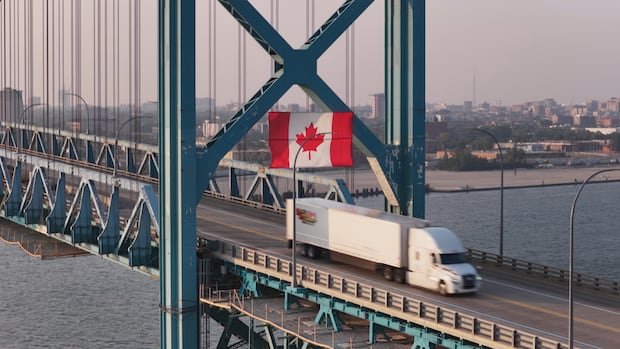

In recent months, amidst growing uncertainties surrounding the highly anticipated opening of the Gordie Howe International Bridge, representatives from the privately-owned Ambassador Bridge along the Detroit River have been actively engaging trucking companies in an apparent effort to retain their business, as indicated by an industry representative.
Lak Shoan, the director of policy at the Ontario Trucking Association, shared that his organization began receiving reports from a few members in the spring about the Ambassador Bridge’s outreach activities. It was not an official disclosure to their organization but rather surfaced in casual discussions. Reports suggested increased efforts by the Ambassador Bridge to connect with more companies.
Several Canadian trucking companies with cross-border operations were contacted by CBC Windsor to inquire about any toll rate offers from the Ambassador Bridge. Those who responded declined to discuss private business agreements, while some did not provide any response.
A now-deleted post from late July by a U.S. trucking union official instructed members not to use the newly opened publicly-owned Gordie Howe bridge due to a contract with the Ambassador Bridge, resulting in substantial toll savings per month.
Toll rates and revenue have played a significant role in the prolonged political process to open the $6.4 billion Gordie Howe bridge, entirely funded by the Canadian government. The agreement includes a clause allowing the U.S. government to prevent the new bridge from reducing tolls below the regional average.
The influential Moroun family of Michigan, owners of the Ambassador Bridge since 1979, intensified their political lobbying efforts leading up to an unexpected threat by then-President Donald Trump to impede the new bridge’s opening.
While the bridge eventually commenced operations on July 27, it followed a cancellation of a planned June opening at the U.S. government’s request, according to Prime Minister Mark Carney.
Allegations have surfaced accusing Trump of attempting to obstruct the new bridge’s opening to benefit the Morouns, although representatives for the Ambassador Bridge did not respond to queries before publication. The bridge’s website hints at a cost-effective toll program for select trucking companies.
Shoan expressed that the trucking association was unaware of the specifics of the Ambassador Bridge’s offerings to companies but believed it centered around retention and attracting fleets to use their bridge. He welcomed healthy competition between the bridges, potentially leading to reduced toll costs.
Financial details from Barrett’s Facebook post revealed the terms of the contract between FCA Transport and the Ambassador Bridge, outlining significant cost savings compared to previous arrangements.
Barrett’s post highlighted the substantial financial benefits derived from the exclusive toll contract with the Ambassador Bridge, although Stellantis declined to confirm the existence of such an agreement for their FCA Transport drivers.
Stellantis emphasized the importance of the Gordie Howe International Bridge in enhancing critical border crossings and facilitating seamless logistics for their operations in North America.
Shoan emphasized that amid uncertainties surrounding the Gordie Howe bridge’s opening, any offers from the Ambassador Bridge would likely appeal to trucking firms seeking stability and cost predictability in the current economic climate.