
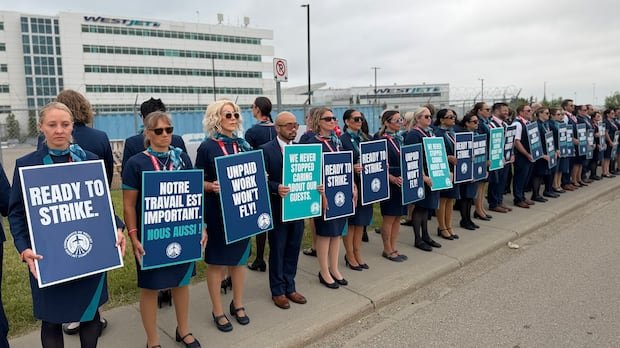

WestJet, the second-largest airline in Canada, is making preparations to gradually cease operations in advance of a potential strike or lockout involving its flight attendants.
Despite the arrangement to wind down operations, ongoing negotiations between the union and the company could prevent a labor dispute from occurring, as stated by WestJet’s vice-president of inflight operations, Robert Antoniuk, in a communication obtained by CBC News. The agreement outlines the process for halting operations if talks between CUPE WestJet Component and the airline fail, but it is not indicative of an immediate move towards labor action.
Federal mediators are actively engaged in the negotiations, as confirmed by federal Transport Minister Steven MacKinnon, who expressed optimism about the progress in discussions during a statement in Montreal.
According to John Gradek, a former Air Canada director and current faculty lecturer at McGill University specializing in supply networks and aviation management, it is standard practice for airlines like WestJet to have contingency plans to manage operations in anticipation of potential labor disputes. Gradek emphasized the importance of pre-positioning to ensure operational readiness and avoid logistical challenges if a shutdown occurs.
WestJet has not announced any flight cancellations related to the labor dispute at present but has extended an offer to waive cancellation or change fees for passengers traveling between July 30 and Aug. 4. However, passengers may only receive credits for future use with WestJet. With over 4,400 union members represented by CUPE WestJet Component potentially able to strike by Aug. 2, and negotiations ongoing since late 2025, the key issue remains unresolved regarding compensation for hours worked by flight attendants.
The current pay system at WestJet compensates flight attendants based on “credit hours,” which may not account for all hours worked, leading to a dispute over unpaid work. While the airline asserts that flight attendants are paid for all hours worked under the existing contract, the union disagrees, highlighting unpaid hours spent on various duties during flights. This discrepancy remains a focal point of contention between the two parties.
WestJet’s history of labor disputes includes a significant strike in 2024 involving unionized airline mechanics, which disrupted travel plans for numerous passengers during the Canada Day long weekend. The ongoing negotiations between WestJet and its flight attendants will determine whether a similar disruption occurs this time.
Despite the current situation, the hope remains that a mutually beneficial agreement can be reached through continued dialogue and mediation to avert any potential disruptions to WestJet’s operations.