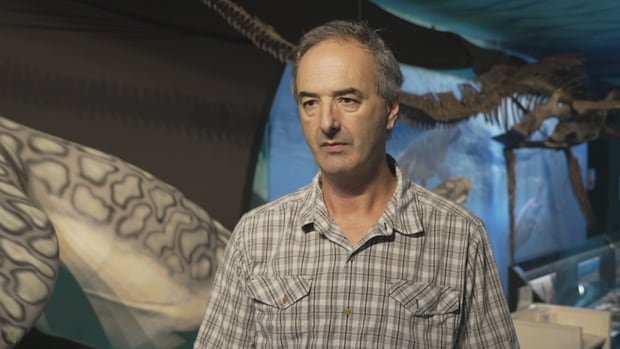

The Canadian Fossil Discovery Centre in Morden, Manitoba, has introduced a new exhibit featuring the Styxosaurus, a long-necked plesiosaur that lived during the Cretaceous period. The exhibit showcases reconstructions of the creature, with the original bones found at North Cox farm near Miami in 1983. Using 3D printing technology, over 400 bones were replicated to reconstruct the full skeleton, along with the creation of a lifelike sculpture of the extinct marine reptile. The Styxosaurus, which could grow up to 12 meters in length and weigh over 4,000 kilograms, had a unique feature of having half of its length attributed to its long neck. Sporting sharp teeth, the Styxosaurus is believed to have hunted in the ancient Western Interior Seaway, a sea that once divided North America. Visitors, like twelve-year-old Jorja Doerksen, are fascinated by the exhibit, appreciating the detailed skeletons and skin models on display. Doerksen, intrigued by the resemblance of plesiosaurs to the mythical Loch Ness monster, finds it cool that the bones were discovered in Manitoba. The museum also invites visitors to suggest names for the Styxosaurus, following the tradition of paleontologists giving nicknames to specimens. At the end of the summer, a name will be chosen from the submissions, with the winner receiving a Styxosaurus-themed prize. Doerksen has suggested the name “Apollo,” drawing inspiration from Greek mythology’s River Styx.

Le Paris Post draws on the expertise of its Paris-based editorial teams and a unique global network of 400 correspondents to provide news bulletins and features, offering listeners the means to understand the world better. Le Paris Post was founded in 2011, and we now have a team of dedicated journalists on the ground in fifty-seven countries.
Team Le Paris Post
Trending
© Le Paris Post. All Rights Reserved.