
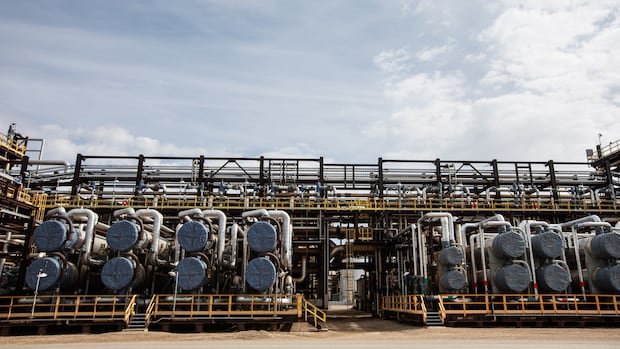

Western Canadian oil production is expected to increase by approximately one million barrels per day over the next seven years, primarily due to expansions in existing steam-driven oilsands projects, according to a recent report by Enverus Intelligence Research. However, the planning and construction of such projects can be time-consuming, limiting producers’ ability to capitalize on the rise in global crude oil prices resulting from the Middle East conflict.
As of midday, West Texas Intermediate crude for June delivery was trading around $90 US per barrel, down from its peak of $114 US during the conflict but still 33% higher than pre-war levels in late February. Enverus notes that the oilsands offer drilling opportunities for the next 50 years with break-even prices below $50 per barrel of US WTI.
Dane Gregoris, Managing Director at Enverus, described the Canadian oilsands as a valuable long-term resource in North America with substantial inventory depth and competitive sustaining economics. However, he cautioned that with the projected growth rates, available pipeline capacity to transport Western Canadian crude to market will likely reach full capacity by the early 2030s, including recent expansions to existing pipelines.
Gregoris emphasized the importance of initiating the planning and permitting process for new pipeline projects now, given the extended timelines typically associated with greenfield pipeline developments. The Alberta government is taking steps to submit an application to the major projects office for a new bitumen pipeline to the West Coast, aiming to facilitate increased shipments of oilsands crude to Asian markets.
An energy agreement signed between the federal government and Alberta late last year outlines a framework for designating a new B.C. pipeline as a project of national interest. However, unresolved conditions, such as the Pathways carbon and storage project agreement, are crucial for the progress of the new pipeline. Companies like Enbridge Inc., South Bow Corp., and Trans Mountain Corp. are actively working on expanding existing pipeline networks to accommodate additional crude oil flows both domestically and for export purposes.
The efforts to enhance oil production and pipeline infrastructure in Western Canada are seen as critical for the region’s economic growth and energy export capabilities in the foreseeable future.