
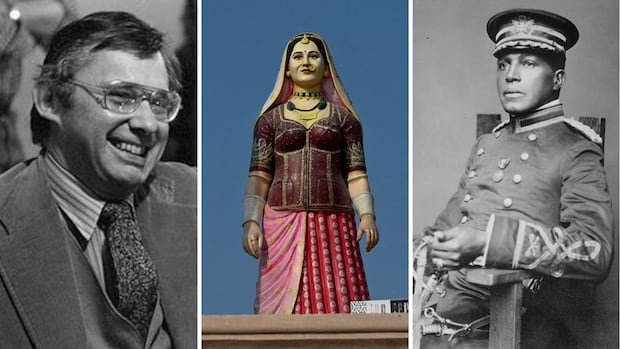

Throughout history, human actions have frequently harmed the environment, leading to the endangerment of forests and wildlife. Amid these challenges, there exist lesser-known narratives of individuals who have dedicated their lives to safeguarding the natural world for future generations. Here are three compelling stories from India, the United States, and Canada.
In 1730, in the village of Khejarli in the Jodhpur district of Rajasthan, India, Maharaja Abhay Singh sought to construct a new royal palace. To facilitate this, Singh ordered the felling of Khejri trees in the area, crucial for the desert ecosystem as they provided sustenance, shade, refuge, and fodder for animals. Despite the significance of these trees, the royal soldiers and woodcutters proceeded with the directive. Amrita Devi, a woman in the village, observed these actions and courageously confronted the soldiers with her two daughters in an attempt to save the trees. When their pleas were ignored, the women embraced the trees, proclaiming the value of a tree saved even at the cost of a life. The soldiers tragically killed the three women, sparking widespread resistance in neighboring villages. This event marked India’s first recorded environmental movement and the world’s earliest women-led environmental initiative. Ultimately, an estimated 363 individuals perished defending the trees before the king halted the operation and imposed a prohibition on tree-cutting.
In North America, marginalized groups have often been overlooked for their contributions to environmental conservation history. One such overlooked figure is Charles Young, who defied racism to become the first Black superintendent of the U.S. national parks system. Born into slavery in 1864 in Kentucky, Young escaped with his family to Ohio as a child. Despite facing racism during his career, Young excelled academically and eventually became one of the first Black students at his high school. Following graduation with honors, he attended West Point, the U.S. Military Academy, in 1884 and served in a cavalry unit in Nebraska, enduring racial discrimination and isolation. Nevertheless, he progressed through the ranks and in 1903 was tasked with leading troops to safeguard what are now Sequoia and Kings Canyon National Parks in California. Young and his troops protected the parks by preventing grazing by livestock, illegal logging, and poaching while also constructing early pathways through the wilderness that have since become integral parts of modern trail systems, enhancing park accessibility for future generations.
In the 1970s, interest in oil and gas exploration in the Canadian Arctic surged following the discovery of a significant oil field at Prudhoe Bay in Alaska in March 1968. This led to plans for a pipeline cutting through the ecologically delicate Mackenzie River Delta spanning the Yukon and Northwest Territories to Alberta. In response to mounting opposition led by Indigenous communities and environmental groups, the federal government initiated a public inquiry in March 1974, appointing Thomas Berger, a B.C. Supreme Court justice at the time, to head the Mackenzie Valley Pipeline Inquiry. Initially focusing on technical aspects, Berger significantly expanded the inquiry, visiting all 35 northern communities and holding extensive hearings allowing testimony in local languages. In 1977, he recommended against constructing a pipeline through Alaska and the northern Yukon due to ecological sensitivity, particularly concerning caribou calving grounds crucial to Indigenous sustenance. Berger proposed that a Mackenzie Valley route proceed only after a 10-year moratorium to settle land claims and foster a renewable resource economy. The project was ultimately abandoned in 2017 after Imperial Oil withdrew amid declining prices and more cost-effective alternatives. Berger’s dedication to listening to community voices and thorough examination of the environmental implications underscored the significance of his inquiry.