
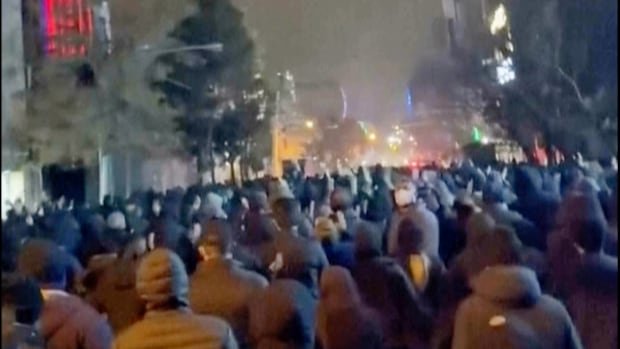

U.S. President Donald Trump has indicated that the United States is considering various responses, including military options, in light of the violent crackdown on protests in Iran. Trump mentioned the possibility of engaging with Iranian officials and revealed ongoing communications with opposition figures. This situation represents a significant challenge to the clerical regime since the 1979 Islamic Revolution.
“Iranian Foreign Minister Abbas Araqchi emphasized readiness for both conflict and dialogue during a briefing with foreign ambassadors in Tehran,” stated Araqchi, emphasizing that the situation in Iran is now “under control” following a surge in violence related to the protests. Communications between Araqchi and U.S. special envoy Steve Witkoff are ongoing, with additional channels available through Switzerland.
Trump has issued a warning to Iranian leaders, cautioning against attacking protesters. A U.S.-based rights group, HRANA, reported the deaths of 490 protesters and 48 security personnel, with over 10,600 individuals detained. Despite this, Iran has not officially disclosed casualty figures, and independent verification has been hindered by an internet blackout.
While there is widespread unrest in Iran, there is no visible division within the Shia clerical leadership or security forces. The opposition lacks a unified leadership structure, contributing to its fragmentation. Regime officials have called for counter-protests in response to the ongoing turmoil.
Trump mentioned that Iran has expressed interest in negotiating its nuclear program, which was previously targeted in a military operation by Israel and the U.S. Trump signaled a potential meeting with Iranian officials while also considering preemptive actions in light of the current situation. Iranian authorities have accused the U.S. and Israel of instigating unrest and organized nationwide rallies in response.
Plans for potential actions against Iran are under discussion by senior U.S. advisers, with options including military strikes, cyber warfare, sanctions, and support for anti-government entities. However, there are concerns about the risks associated with military strikes, particularly concerning civilian casualties in densely populated areas where elite military installations are located.
Iran’s parliamentary speaker, Mohammad Baqer Qalibaf, issued a stern warning to the U.S., threatening retaliation against American bases and allies in the event of an attack on Iran. Despite the saber-rattling, Iran is still recovering from previous conflicts, which have weakened its regional influence.
The protests in Iran, initially sparked by economic grievances, have evolved into broader anti-government demonstrations. The Revolutionary Guards, with significant business interests, have become a focal point of public resentment. Efforts to restore internet access in Iran and diplomatic maneuvers with European countries are also ongoing amid the escalating tensions.