
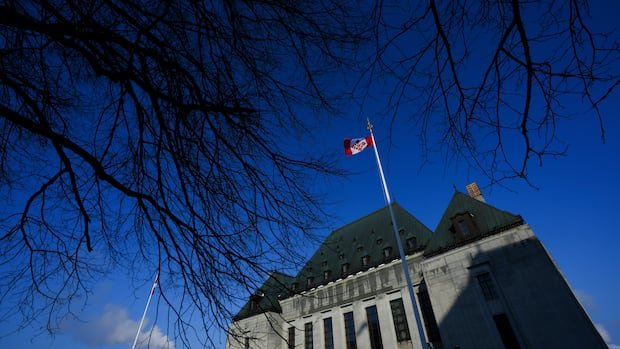

The recent decision by the Supreme Court of Canada has confirmed the legality of a law that restricts the ability of members of a parliamentary oversight committee on national security and intelligence from using their parliamentary immunity to disclose information. The 8-1 ruling by the top court resolves a complex legal issue pertaining to the National Security and Intelligence Committee of Parliamentarians (NSICOP).
NSICOP, comprising MPs and senators representing different political parties, is privy to sensitive classified data. While parliamentarians typically enjoy immunity from legal action for statements made in Parliament, NSICOP members could potentially face severe penalties, including up to a 14-year prison sentence, for unauthorized disclosure of protected information as per the legislation governing the committee.
Ryan Alford, a law professor at Lakehead University, led a legal challenge against the law, contending that Parliament cannot limit parliamentary privilege without a constitutional amendment. Although Alford initially succeeded in the Ontario Superior Court, the decision was overturned by the Ontario Court of Appeal in April 2024.
Following this, Alford appealed to the Supreme Court, which ultimately upheld the legislation as a lawful and specific restriction on parliamentary privilege, aligning with the Constitution’s relevant provisions. The court’s judgment, issued on Friday, characterized the law as a “narrow limitation” that was enacted in accordance with constitutional requirements.