
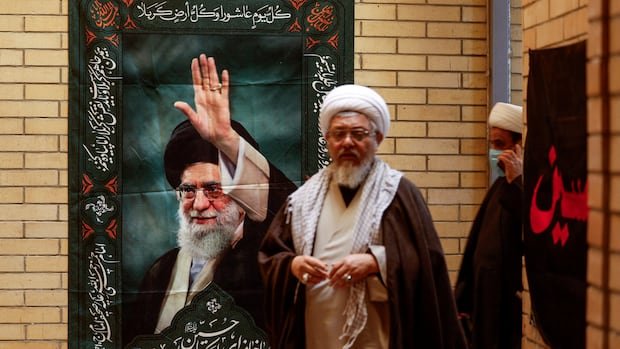

In the wake of the killing of Iran’s Supreme Leader Ayatollah Ali Khamenei in a coordinated attack by Israel and the U.S., the country’s deep-seated divisions regarding his life and impact were evident.
The news of Khamenei’s death was announced by an Iranian state television anchor on Saturday night, who struggled to contain his emotions, describing the deceased leader as the “compassionate father of kindness and determination.”
According to a report in the New York Times, Khamenei, along with numerous high-ranking regime officials, was eliminated when the CIA located them in a command center, followed by an Israeli missile strike.
Following the news, crowds gathered in public areas like Enghelab Square in Tehran on Sunday to mourn Khamenei’s passing, chanting his name and expressing sorrow.
Known for his 36-year rule and status as the longest-serving leader in the Middle East, the 86-year-old cleric was admired by some Iranians for his resilience and transformation of Iran into a regional force that stood up to U.S. and Israeli influences.
However, there were contrasting scenes in Iran, with pockets of celebration in response to Khamenei’s death, particularly in Tehran neighborhoods where impromptu street festivities broke out and were shared on social media.
Critics of Khamenei pointed to his repressive policies, particularly towards women, and his record of violence against dissenters during protests, including the recent ones in January and 2022.
The aftermath of Khamenei’s assassination has raised questions about the future leadership of Iran and the potential implications for the ongoing conflict with the U.S. and Israel.
While the loss of Khamenei marks a significant event, experts highlight that the Islamic Republic’s institutions and the Revolutionary Guards are entrenched and capable of ensuring continuity despite the leadership vacuum.
Efforts are being made to maintain stability in Iran, with the appointment of Alireza Arafi to a key role in the interim Leadership Council as the country navigates a transition period.
Despite calls from U.S. President Donald Trump for Iranians to seize the moment for change, the immediate future of Iran’s government remains uncertain amid the ongoing military actions.
The complex messaging surrounding the conflict, the goals of the attacks, and the lack of a comprehensive post-war plan have raised concerns among analysts about the potential outcomes and stability in the region following Khamenei’s demise.