
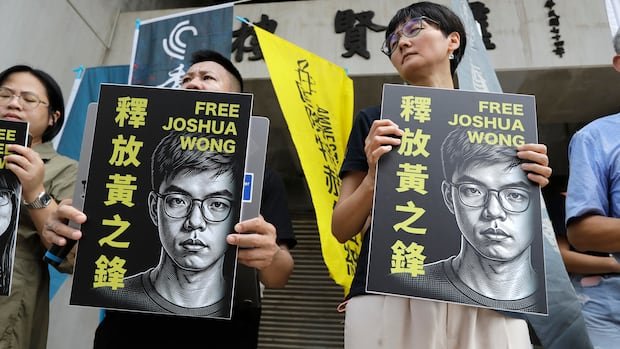

Joshua Wong, a well-known pro-democracy activist in Hong Kong, admitted guilt on Wednesday to a charge of conspiring with foreign forces to jeopardize national security under a law imposed by Beijing. This marks Wong’s second prosecution under the national security law introduced in 2020 to suppress the city’s pro-democracy movement.
Appearing in court wearing a blue shirt, Wong looked visibly thinner as he entered his plea. Supporters offered words of encouragement, expressing hope for his early release. Wong’s friend mentioned that he kept busy in prison with activities like reading, studying, playing the guitar, and exercising.
Wong faces a potential prison sentence of three to 10 years, or even life imprisonment if the offense is deemed severe. He was already serving a sentence of four years and eight months for a previous national security case related to an unofficial political primary.
Critics argue that Wong’s case reflects the authorities’ efforts to silence dissent, while Beijing views him as an anti-China activist who supports Hong Kong independence, a stance considered unacceptable. The charges against Wong involve collaborating with other activists to solicit foreign entities to take hostile actions against Hong Kong or China.
Joshua Wong gained prominence in 2012 for protesting against national education reforms in Hong Kong schools as a high school student. He further rose to fame as a leader of the 2014 Occupy Movement. In 2016, Wong co-founded “Demosisto,” a political party with other young activists like Nathan Law, who later became the city’s youngest lawmaker.
Wong’s involvement in seeking international support for Hong Kong’s democracy movement during the leaderless 2019 protests drew criticism from Beijing. Demosisto disbanded following the implementation of the security law in 2020, a move justified by authorities as necessary for the city’s stability.
Several other prominent activists, including media mogul Jimmy Lai, were also imprisoned under the same law. Some activists fled to democratic nations like the U.S. and the U.K. Hong Kong authorities have offered rewards for information leading to the arrest of Law and other activists now residing overseas.