
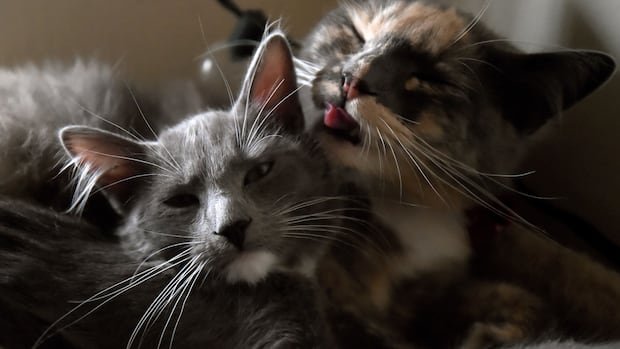

Cat behaviorist Morgane Van Belle discussed the nuances of cat grooming in a recent interview. According to research from Ghent University in Belgium, cats use allogrooming, or mutual grooming, for various purposes. Sometimes it’s a friendly gesture, while other times it can be a subtle way for cats to convey messages like wanting a specific spot or object.
Van Belle’s study, inspired by her own cats, Fabio and Giovanni, revealed that grooming interactions can range from positive social bonding to more competitive behavior. By observing the behavior of cats being groomed, one can differentiate between affectionate grooming and confrontational grooming, which often involves biting and asymmetric body postures.
The study analyzed videos from 53 households with multiple cats in Europe to understand the dynamics of allogrooming. Suzanne MacDonald, a psychology professor, commended the study for its detailed analysis and practical implications for cat owners in interpreting their cats’ behavior.
Allogrooming is not exclusive to cats and is observed in other species like primates and horses. Van Belle emphasized that even aggressive grooming serves a purpose in preventing more severe conflicts among cats. Despite occasional disagreements, cats like Fabio and Giovanni maintain a good relationship through grooming and playful interactions.
The findings highlight the complexity of cat behavior and the importance of understanding the subtle cues cats use to communicate and resolve conflicts.