
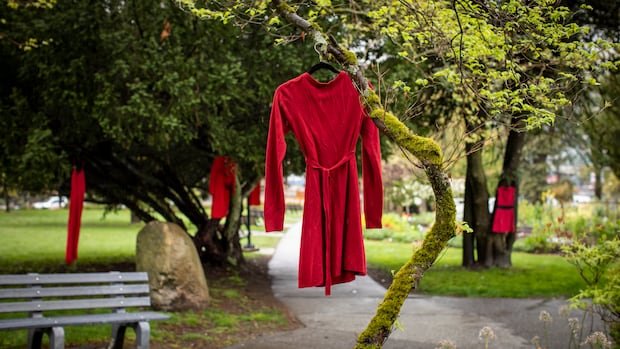

May 5 is observed as Red Dress Day throughout Canada, dedicated to honoring missing and murdered Indigenous women, girls, and two-spirit individuals and to advocate for awareness and change. In a 2023 report by Statistics Canada, it was revealed that Indigenous women and girls were six times more likely to be victims of murder compared to non-Indigenous counterparts between 2009 and 2021. The report also highlighted a disparity in police recommendations for first-degree murder charges, with Indigenous victims receiving lower recommendations compared to non-Indigenous victims.
According to the Assembly of First Nations, despite Indigenous women constituting 4.3% of Canada’s population, they represent 16% of female murder victims and 11% of missing women. Red River Métis artist Jaime Black-Morsette initiated the iconic REDress Project over 15 years ago, hanging red dresses in public spaces to symbolize the ongoing tragedies affecting Indigenous communities. This poignant art installation has since evolved into a national day of awareness.
Black-Morsette, speaking with CBC’s Stephen Quinn, shared her motivation behind the Red Dress movement and her continuous efforts to seek justice for missing and murdered Indigenous women, girls, and two-spirit individuals nationwide. The artist emphasized the significance of the color red, representing life and unity, as a central theme in the project. Reflecting on the widespread impact of the Red Dress Project, Black-Morsette acknowledged the collective effort of communities and supporters in raising awareness and advocating for change.
In addition to her artistic endeavors, Black-Morsette recently launched a non-profit organization aimed at providing healing spaces through arts and cultural programs for Indigenous women, girls, and two-spirit individuals. Despite the publication of 231 calls for justice by the National Inquiry into Missing and Murdered Indigenous Women and Girls seven years ago, only a few recommendations have been implemented, indicating a slow response to systemic change.
Addressing the need for practical measures to protect Indigenous women and girls, initiatives like the proposed Red Dress Alert system have gained traction, calling for a national mechanism akin to an Amber Alert. Black-Morsette expressed support for such initiatives and emphasized the importance of community involvement and advocacy in driving policy changes.
On Red Dress Day, Black-Morsette encourages individuals to display red dresses, engage in ceremonies, participate in marches, and support Indigenous communities. By amplifying voices, fostering alliances, and advocating for policy reforms, everyone can contribute to the ongoing efforts to remember and honor missing and murdered Indigenous women, girls, and two-spirit individuals.