
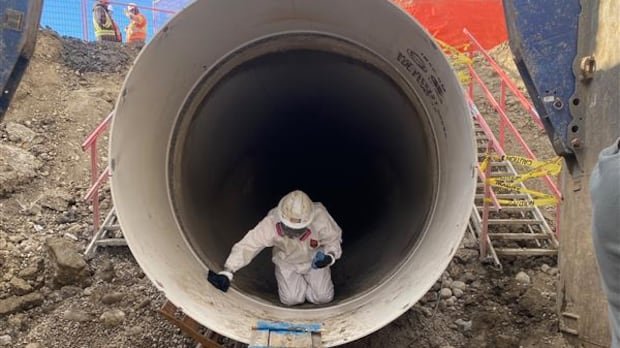

City council has approved moving ahead with recommendations outlined in an independent panel’s assessment of the 2024 failure of a critical water feeder main in Calgary after Mayor Jeromy Farkas emphasized the need to implement changes without hesitation.
Following a lengthy debate on Wednesday evening, council members unanimously agreed to initiate actions based on the recommendations provided in the report released the same day. The report highlighted the urgent need to address underlying and long-standing issues related to Calgary’s water infrastructure.
According to the report, concerns about the potential failure of the pipe were initially raised in 2004 following a rupture of another feeder main in northeast Calgary. However, over the subsequent two decades, the city deferred necessary inspections, monitoring, and risk mitigation measures for the Bearspaw feeder main.
Despite the Bearspaw line being identified as a high-consequence risk, limited perceived chances of failure often resulted in resources being allocated to other areas, as per the report. The panel’s review offered various recommendations, including expediting the twinning of the Bearspaw feeder main by early next year, maintaining the current pipe, and establishing a dedicated water utility department overseen by independent experts.
Emphasizing the critical nature of the recommendations, the report underscored the pipe’s vulnerability to future catastrophic failures if action is not taken promptly. Mayor Farkas urged the council to implement all the panel’s recommendations without exception, noting the necessity of not only replacing the line but also enhancing redundancy within the city’s water system.
Acknowledging the lack of a single accountable leader for Calgary’s water utility over the years, the report pointed to ongoing governance challenges across different city councils and management teams. The report highlighted the complexity and size of Calgary’s water system, noting the need for stable investment to maintain reliability and address infrastructure deterioration.
The panel strongly recommended expediting the duplication of the steel pipe within 12 to 14 months, prioritizing safety and innovation over cost to meet an aggressive timeline. Additionally, it proposed establishing a water utility department led by a chief operating officer of water, ensuring a stable revenue base for asset renewal and reliability while keeping water service rates reasonable.
Interviewees highlighted a culture of deferral and risk tolerance stemming from consensus-based decision-making, leading to delayed infrastructure improvements. The panel’s recommendations aim to address systemic gaps, foster accountability, and proactive risk management to prevent future failures in Calgary’s water system.
City council members engaged in detailed discussions with the panel on Wednesday, seeking further insights on addressing delayed water system enhancements and acting on the report’s suggestions. Panel members emphasized the urgency of addressing the water system’s resiliency issues neglected due to short-term growth accommodations.
The report’s release coincided with a recent feeder main break, prompting a renewed focus on expedited repairs and long-term solutions for Calgary’s water infrastructure challenges. The panel stressed the need for sustained attention and commitment to implementing the recommended reforms for a more resilient and reliable water system in the city.