
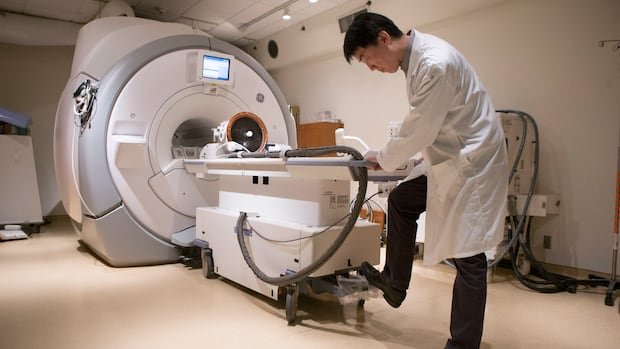

Some medical clinics in Alberta are cautiously evaluating the province’s new initiative allowing patients to directly schedule diagnostic imaging tests without a doctor’s referral. Operators of the imaging machines express doubts about the effectiveness of the program due to a shortage of medical radiation technologists in Alberta, as stated by Gina McRae, the Alberta provincial manager for the Canadian Association of Medical Radiation Technologists.
Premier Danielle Smith’s administration has modified regulations to enable patients to self-book tests and pay upfront instead of requiring a physician’s referral. The program commenced recently, with patients being eligible for reimbursement by the province if a previously undiagnosed cancer is detected. However, reimbursement is not applicable if the test results are negative, reveal a known condition, or another ailment.
Clinics retain the authority to reject tests they deem unnecessary or unsafe. Some clinics are currently declining self-referral bookings as they navigate the intricacies of the new policy. The province anticipates that the program will encourage private operators to invest in imaging technology, thereby reducing wait times for all patients.
McRae highlights that prior to the program, technicians in Alberta were already facing capacity constraints and expresses concerns about meeting the escalating demand resulting from self-referrals. A survey conducted by her organization previously indicated a shortage of around 202 full-time equivalent jobs in the province, a figure expected to double by 2028.
Data from the Canadian Institute for Health Information reveals a worsening trend in MRI wait times in Alberta since 2020. Although there was a significant reduction in wait times in 2020 due to the onset of the COVID-19 pandemic, median wait times for MRIs in the province remain a concern.
As the program is in its infancy, several clinics are in the process of reviewing the changes before implementing self-referral services. Clinic owners like Tony Alcazar are monitoring developments to assess the impact on their operations before deciding to participate in the program.
While the provincial government assures that privately booked patients will not supersede doctor-referred appointments, questions have been raised about the program’s compliance with the Canada Health Act’s principles. Concerns have been voiced that the initiative could potentially lead to a two-tier health-care model, diverging from the Act’s mandate of ensuring universal and equitable access to necessary medical care.
Andrew Longhurst, a political economist at the Canadian Centre for Policy Alternatives, suggests that Alberta’s policy changes could complicate the national health-care system and move the province closer to a two-tier model. The province’s emphasis on “preventative health testing” is viewed as a means to circumvent the requirements of the Canada Health Act.
One patient who had prior experience with private clinics expresses reservations about the province’s shift towards self-referral testing, citing concerns about affordability and equity in access to healthcare services. Tanya Mazzer from Airdrie, Alberta, shares her challenging experience navigating the public health system and opting for private clinics due to long wait times.