

Over the last year, a nonpartisan commission conducted a province-wide tour to gather input on the delineation of electoral boundaries in Alberta. This commission, which is reconstituted every eight to ten years, is responsible for determining which communities should be grouped together for the purpose of electing members to the Alberta Legislative Assembly. In March, the commission presented an extensive report comprising hundreds of pages detailing its conclusions.
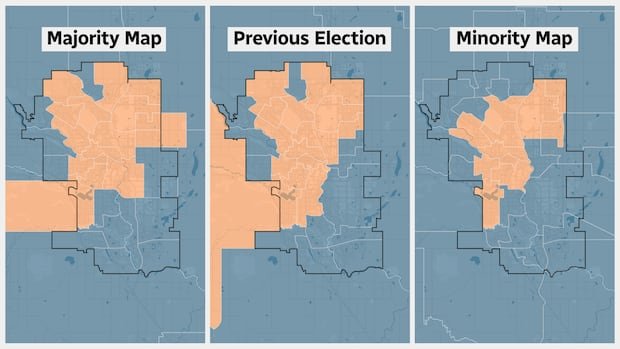
Notably, the final report of the commission, consisting of five members, featured two contrasting maps proposed by the majority and minority factions within the group. Justice Dallas Miller, the chair of the boundary commission, recommended that the legislature endorse the majority report. However, in the event of non-adoption, Miller suggested increasing the number of legislative seats from 89 to 91. The Opposition NDP expressed concerns that not accepting the majority report could be seen as “election rigging,” while the UCP emphasized its aim to safeguard rural representation.
In response to the issue of representation, the UCP formed an all-party committee within the Alberta legislature to revisit the boundary redrawing process. However, the committee encountered obstacles when Alberta’s acting chief justice declined the request for assistance in appointing retired and sitting judges to oversee the boundary revision efforts.
The ongoing debate is expected to dominate discussions in the Alberta legislature for several months leading up to an anticipated report in November. In the meantime, the public has access to the commission’s submitted report, which highlights the potential electoral implications based on different boundary configurations.
To better interpret the reports, CBC News’ elections unit and data journalists, including Naël Shiab and Meg Banks, conducted a transposition of votes exercise. This analysis aims to project how the previous general election results might have differed under the new boundary proposals, providing insights into the potential impact of boundary adjustments on electoral outcomes.
In the previous election, the United Conservative Party secured 49 seats compared to the Alberta New Democrats’ 38. With the majority report’s boundaries, the UCP could potentially win up to 48 seats, whereas under the minority maps, they might secure as many as 56 seats.
The battleground for electoral shifts primarily centers on Calgary, where close races were observed in several ridings. Notable alterations in boundaries could result in the flipping of multiple ridings in different directions, impacting the political landscape in the city. Additionally, proposed changes in Edmonton and rural areas of Alberta could also influence future electoral outcomes.
The debates surrounding electoral boundaries in Alberta reflect a complex interplay of political interests and community representation, underscoring the significance of fair and transparent redistricting processes for the democratic system.