
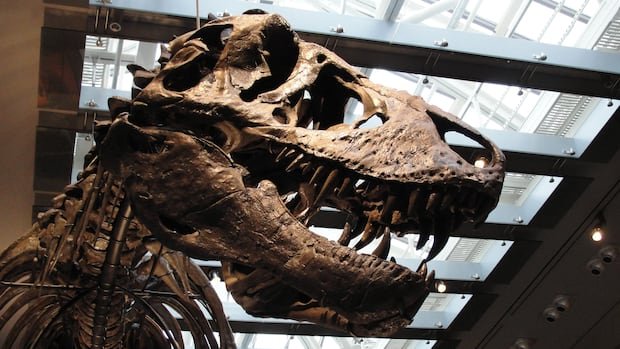

Researchers have utilized a novel approach to gauge the body temperature of two Tyrannosaurus rex dinosaurs, shedding light on the long-debated warm-bloodedness of these creatures. Aradhna Tripati, a geochemist from the University of California, led this study, which was recently published in the journal Science Advances. Traditional methods of temperature measurement were impractical due to the dinosaurs’ extinction millions of years ago.
To determine the body temperature of these extinct animals, scientists employed a chemical technique that relies on variations in bioapatite, a mineral found in hard tissues like tooth enamel and eggshells. This method analyzes the bonding of carbon and oxygen atoms within the bioapatite, specifically looking at the clumping of isotopes, which correlates with temperature changes. A decade ago, a similar analysis on dinosaur eggshells suggested that dinosaurs like titanosaurs and oviraptors were warm-blooded.
In the case of the T. rex, researchers faced challenges due to the thin enamel of its teeth. By refining their technique using teeth from the megalodon shark, they managed to analyze minute samples from the T. rex named Thomas. The analysis revealed a body temperature range of 33.8°C to 38.8°C, comparable to large mammals and possibly flightless birds like ostriches. This finding has significant implications for understanding the behavior and habitat range of these ancient predators.
The study has garnered praise from paleontologists, such as Anthony Fiorillo, who noted the compelling evidence presented. This research prompts a reevaluation of how dinosaurs, particularly tyrannosaurs, adapted to diverse environments, including the Arctic. While the study indicates a warm-blooded nature in T. rex, debates persist on the specifics of their metabolic processes and dietary requirements relative to modern warm-blooded species.