
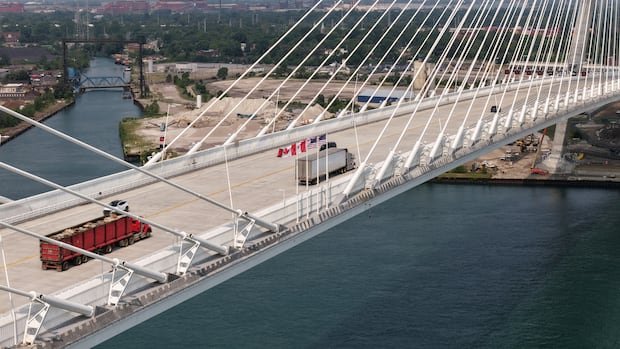

Traffic on the newly opened Gordie Howe International Bridge, linking Windsor, Ontario, and Detroit, exceeded 340,000 crossings in its inaugural month of operation, as per recent data. In August, the bridge witnessed 343,507 crossings, similar to the nearby Ambassador Bridge’s 345,445 crossings during the same period.
However, there was a distinction in the types of vehicles utilizing the two bridges. The majority of crossings at the Gordie Howe bridge comprised passenger vehicles, with nearly 270,000 compared to around 74,000 trucks. In contrast, at the Ambassador Bridge, truck traffic was approximately 150,000, while passenger cars totaled 196,000.
Jason Miller, a supply chain management expert at Michigan State University, suggested that many trucking companies have existing toll contracts with the Ambassador Bridge, which could be the reason for the traffic distribution. He mentioned that until renegotiations occur or new contracts are established with the Gordie Howe Bridge, trucking companies are likely to maintain their current arrangements.
The Windsor-Detroit Tunnel recorded the highest volume of passenger vehicle crossings in August, with around 280,000 trips. Statistics Canada released data providing insights into the origins of travelers using the various entry points within the Windsor-Detroit corridor. The agency reported that in August, the Gordie Howe International Bridge facilitated 134,900 return trips from Canada to the U.S. by car, with over half being same-day trips. Additionally, it served as a port of entry for 101,000 U.S. residents traveling to Canada by car, with a similar percentage of same-day trips.
Furthermore, the agency disclosed that 34,800 commercial transport trucks entered Canada through the Gordie Howe Bridge in the past month, while commercial truck entries at other Windsor ports increased slightly compared to the previous year.
Miller anticipated shifts in traffic volumes at the three crossings in the upcoming months, attributing it to the novelty factor of the Gordie Howe Bridge wearing off. Despite this, he emphasized the necessity of the new crossing, noting that the high traffic levels reflect the demand for an additional bridge.
Looking ahead, Miller expressed curiosity about potential information on wait times at the bridges, emphasizing the importance of ensuring smooth commerce flow beyond just the number of crossings.
Overall, the data underscores the significant impact and evolving dynamics of traffic patterns at the Windsor-Detroit border crossings.