
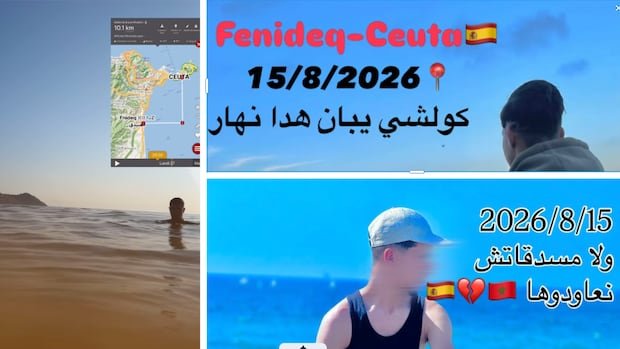

In the lead-up to the recent significant influx of migrants to Europe, a brief video shared on Instagram went viral with 1.4 million views. The video depicted a young man in water up to his neck, followed by a view of land in the distance and a map outlining a sea route from Fnideq, Morocco, to Ceuta, a Spanish enclave in Africa. The video’s caption, “we’ve arrived,” sparked discussions among viewers.
This video was just one of many trending posts on platforms like Instagram and TikTok that appeared to influence two waves of irregular migration from Morocco to Ceuta. These platforms are part of a larger network focused on migration-themed culture, including music, memes, and visuals. Some of these accounts seem to exploit the aspirations of African and Middle Eastern youth seeking better opportunities abroad.
There is a debate among authorities and organizations regarding whether a single entity orchestrated the events in Ceuta or if migration was manipulated for geopolitical purposes. Nonetheless, it is evident that misinformation, amplified by multiple online communities, played a significant role in driving the migration waves towards Ceuta this summer.
CBC’s visual investigations team, with support from Sebastian Vandermeersch of Bellingcat, identified numerous social media accounts on platforms like Instagram that were active before the initial wave on July 30. Misinformation suggesting that Spain would no longer reject migrants arriving by sea due to a court ruling triggered a surge in posts. This led to over 72,000 individuals crossing the border on July 30, causing chaos in Ceuta and sparking a European political crisis.
While the majority of migrants have returned to Morocco, around 5,000 remain in Ceuta, with some residing on a beach with support from charitable organizations. The situation highlights how misinformation, when propagated through online channels, can have tangible consequences for individuals seeking answers in desperate situations.
The proliferation of social media posts promoting the next “window” for entering Spain on August 15 indicates a continuous effort to mobilize migrants. Despite Meta and TikTok agreeing to fact-check posts to combat misinformation, new accounts emerged ahead of the August 15 crossing, along with existing ones from the July 30 event.
The online messaging resonated with many individuals due to the existing trend of successful migration to Ceuta even before the recent events. The Mixed Migration Centre noted that Ceuta has become a popular entry point into Spain, possibly due to increased patrols on other migration routes.
The surge in migration-related content online reflects the aspirations and challenges faced by young people in North Africa and beyond. Accounts promoting migration used aspirational language and imagery, resonating with individuals facing high unemployment and limited opportunities in their home countries.
As the situation unfolded, authorities in Morocco and Spain took preventive measures to deter further mass crossings. Despite efforts to combat misinformation, the impact of online content on real-world migration patterns remains a complex issue that requires ongoing attention and collaboration between governments and social media platforms.