
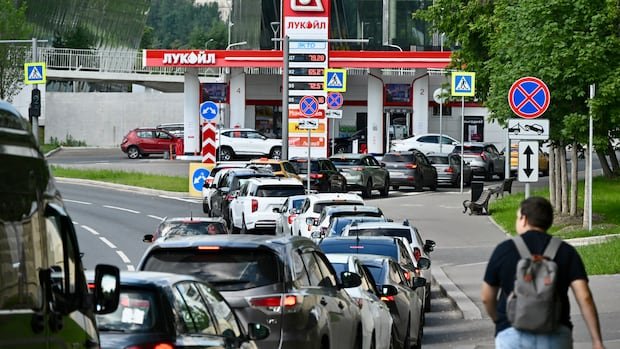

President Vladimir Putin sought to reassure the public amidst growing concerns over fuel shortages in Russia, sparked by Ukrainian strikes. While downplaying the severity of the situation, the Kremlin has taken significant measures, including banning exports of gasoline and jet fuel. Additionally, Russia is exploring the rare option of importing oil products from other countries.
The move to consider importing fuel highlights the impact of sustained Ukrainian strikes on Russia’s refining capacity. The International Energy Agency described the disruption as unprecedented, with Russia’s oil production falling below target levels. Gasoline production has also seen a significant decline compared to the previous year.
The fuel crisis has led to restrictions, closures of gas stations, and long queues at pumps across many regions. Amidst public frustration, social media has been abuzz with posts highlighting the shortage. The situation has even sparked discussions about the country’s ability to supply enough gasoline to its citizens.
As negotiations continue with undisclosed countries for fuel imports, Russian officials are exploring temporary solutions such as allowing the production of lower-quality fuel. Amidst the crisis, articles have emerged advising motorists on ways to manage fuel consumption.
In response to the shortage, several regions have imposed limits on fuel purchases, leading to emergency declarations in some areas. The situation has fueled speculation and concerns among consumers, with reports of gas stations limiting supplies to manipulate prices.
Economic analysts warn that the fuel crisis could further strain Russia’s struggling economy, complicating efforts to address existing budget deficits. The ongoing crisis may impact decisions related to interest rates, potentially affecting the country’s financial stability.
As the energy industry races to repair refineries ahead of potential future attacks, tensions between Ukraine and Russia continue to escalate. Ukrainian President Volodymyr Zelenskyy approved a 40-day operation aimed at influencing Russia to end the conflict, further complicating the already dire fuel situation in the region.