

Iran’s joint military command issued a warning on Thursday that all oil tankers traversing the Strait of Hormuz must adhere to approved routes or face a “forceful response,” escalating tensions over a vital waterway for global energy supplies. The strait, situated at the entrance of the Persian Gulf, has become a focal point in negotiations to end the Iran war permanently. The statement from the Khatam al-Anbiya military command, as relayed by Iranian state television, followed meetings between U.S. and Iranian diplomats and mediators in Qatar the day before.
The trigger for Iran’s threat remains unclear, but a statement from the U.S. military’s Central Command regarding a meeting with officials from Middle Eastern nations in Bahrain emphasized a mutual commitment to ensuring the free flow of commerce through the Strait of Hormuz. This seemingly provoked Iran, especially as the nation readies for the upcoming funeral of the late supreme leader Ayatollah Ali Khamenei, who perished at the war’s onset in February.
The Iranian warning declared that any non-compliance, deviation from designated routes, or failure to adhere to Iran’s navigation protocols in the Strait of Hormuz would prompt an immediate and forceful response from their armed forces, jeopardizing the security of violating vessels. Additionally, Iran criticized the presence of U.S. fighter jets in the strait, labeling it as a threat to regional security and causing insecurity in the waterway.
The statement further warned that any U.S. attempts to interfere in security matters or disrupt activities in the Strait of Hormuz would be viewed as a threat to Iran’s national sovereignty, warranting swift and decisive retaliation. As part of an interim deal, Iran and the United States agreed to allow ships to pass through the strait without fees for 60 days. However, Iran insisted on controlling vessel routes and implementing fees for passage, a departure from longstanding practices in the waterway.
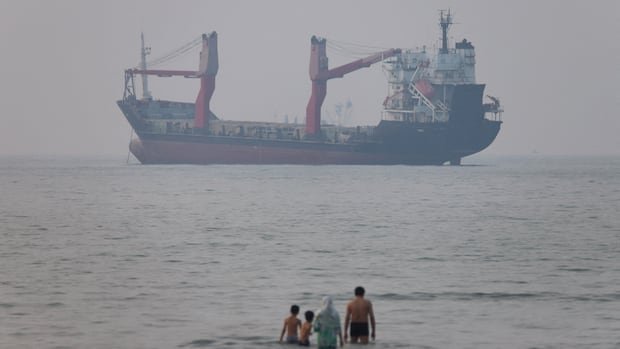
While tensions persist, ship traffic through the strait has increased, with at least 258 vessels transiting the area last week, including during Iranian strikes on commercial ships. Despite recent attacks and lingering tensions, ship movements in the strait have risen compared to previous weeks, though they still remain below pre-war levels. An incident involving a foreign vessel reportedly stranded in the waterway after disregarding Iranian instructions was also reported by Iranian state television, though details suggest the vessel may be linked to Iran and had been stationary for some time.
Wednesday’s discussions were described as making “positive progress” by Pakistani Foreign Ministry spokesperson Tahir Andrabi, who expressed hope for scheduling the next round of talks promptly following Khamenei’s funeral.