
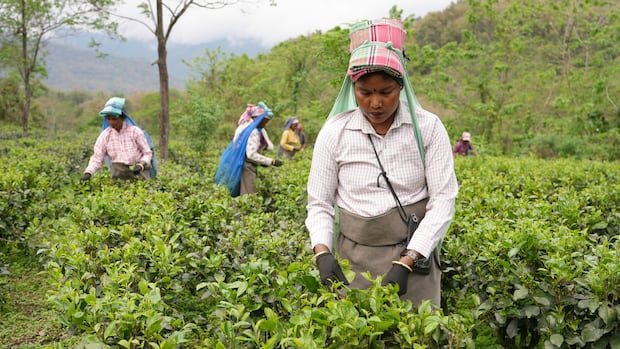

In Darjeeling, amidst the misty March atmosphere, Satish Mitruka strolls through his tea estate’s withered leaves, discussing the impact of shifting weather patterns on his business. Mitruka, a third-generation tea cultivator in the West Bengal region of India’s northeast, expresses concern about the industry’s declining state, echoing sentiments from his international clients. The usual start of plucking season in late February and early March for Darjeeling’s prized first flush, known as the “champagne of teas,” has been complicated this year due to prolonged dry spells followed by heavy March rainfall.
Mitruka, speaking at Nurbong Tea Garden, his organic estate, emphasizes the crucial need for timely, adequate rainfall for the rain-fed tea crop to thrive. The changing climate dynamics have significantly impacted tea production, affecting the quality of leaves crucial for the premium first flush. Darjeeling’s four seasonal flushes, characterized by distinct flavors, are at risk of alteration due to erratic weather patterns.
The Himalayan region, where Darjeeling is situated, is experiencing rapid climate changes, with fluctuating temperatures and irregular rainfall becoming the new norm. The escalating threat of climate change in the Himalayas, warming nearly 50% faster than the global average, poses challenges for tea cultivation. The unpredictability in precipitation patterns and the diminishing winter rains are evident in the region, affecting tea gardens’ health and productivity.
Buyers of Darjeeling tea are increasingly cautious about weather-damaged produce, impacting the region’s tea industry. The fluctuating weather conditions have intensified over the years, leading to concerns about the consistent quality and availability of Darjeeling’s premium teas. The economic viability of the industry is under pressure, with shrinking margins and a decline in production volumes.
As the taste and quality of Darjeeling tea face threats from climate change, the industry’s future is uncertain. The generational continuity in tea cultivation is at risk, as younger individuals are less inclined to pursue a career in the tea industry, mirroring concerns expressed by Mitruka about his son’s reluctance to join the family business. The allure of Darjeeling tea, celebrated for its unique flavor profile, faces challenges from multiple fronts, including climate change impacts and market competition.