
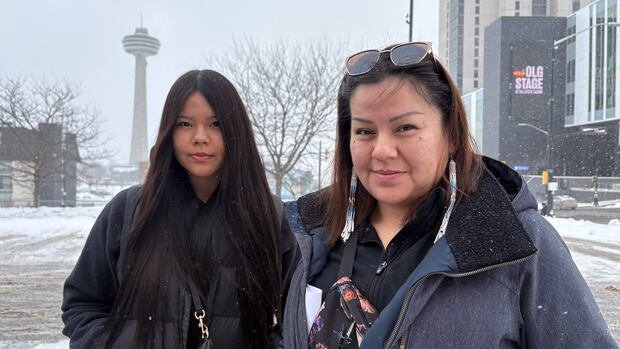

After spending two weeks in Niagara Falls, Ontario, a mother and her teenage daughter from Kashechewan First Nation express their gratitude for the assistance received, although they miss the natural surroundings of their homeland. Out of the 2,300 residents of the First Nation, a large number have been displaced due to an ongoing water crisis caused by a malfunctioning treatment plant. To support the 1,700 evacuees in Niagara Falls, local authorities and Indigenous groups are striving to provide a welcoming environment.
The emergency was declared on January 4 by Chief Hosea Wesley of Kashechewan, as the water treatment plant faced issues with its pumps, hindering the proper treatment of drinking water. Kerri-Ann Koosees, one of the evacuees, mentioned the unexpected nature of the evacuation and the initial challenges they faced upon arrival in Niagara Falls, where efforts have been made to accommodate their needs.
Presently, around 921 evacuees from Kashechewan are residing in Niagara Falls, with plans for some to relocate to other cities like Kapuskasing, Timmins, and Kingston. The city is prepared to accommodate up to 1,700 individuals, with no further arrivals expected unless circumstances change.
Concerns about the water crisis in Kashechewan were heightened when reports revealed 63 confirmed cases of cryptosporidium, a parasite causing gastrointestinal issues. The presence of the parasite in the treatment plant’s water supply has raised alarm, leading to worries about the health risks faced by vulnerable community members.
The disruption caused by the evacuation has affected the education and daily lives of young people like Keisha Paulmartin, who is now focused on academic support and recreational activities offered in Niagara Falls. The adjustment to urban life from the remote community has been challenging for many, highlighting the importance of community support and resources during this difficult time.
As they navigate this period of uncertainty, the residents of Kashechewan remain grateful for the assistance provided by strangers in distant cities and the resilience of their community in facing adversity. The road ahead may be challenging, but with continued support and solidarity, they aim to overcome the obstacles brought by the ongoing crisis.