
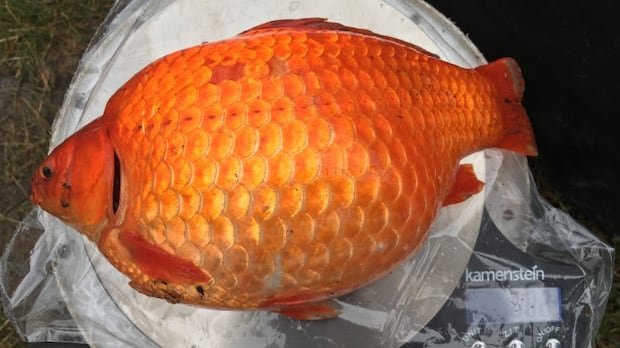

In Alberta, the spread of invasive goldfish, some as large as dinner plates, is causing concern among authorities. The provincial government is emphasizing the serious threat that native ecosystems face due to the release of goldfish into various water bodies in the region. Environment Minister Grant Hunter highlighted the issue, stating that goldfish are more suited for aquariums than Alberta’s natural waters and urged people not to release them.
Reports indicate that over 100 locations in Alberta have been identified with goldfish presence, and this number continues to grow annually, as per aquatic invasive species specialist Nicole Kimmel. Contrary to popular belief that goldfish enter waterways through accidental means, individuals are intentionally depositing them into the environment, where they thrive, reproduce, and survive harsh conditions.
To combat this problem, Alberta has launched the “Don’t Let It Loose” campaign to deter the unlawful release of species into water bodies, punishable by fines up to $100,000 and/or imprisonment. Kimmel emphasized the unintended consequences of releasing goldfish, such as introducing diseases, snails, and plants that can disrupt Alberta’s aquatic ecosystems.
Goldfish, being highly adaptable and prolific breeders, pose a significant threat to native aquatic species due to their voracious feeding habits and ability to survive extreme conditions, including Alberta’s winters. The rapid reproduction rate of goldfish, with a single fish capable of producing thousands of offspring in a short period, gives them a competitive edge in local environments.
In addition to Alberta, the global impact of invasive goldfish is a concern, as highlighted by University of Toronto biologist Nicholas Mandrak. He emphasized that goldfish, known as “global invaders,” have been found in various regions, including Siberia, due to their resilience in harsh environments.
Mandark’s research in Ontario focuses on controlling the spread of goldfish from storm-water management ponds into the wild. These ponds, often used as release sites by individuals due to their proximity to residential areas, provide suitable conditions for goldfish reproduction and growth.
Efforts to manage goldfish populations in Alberta involve monitoring and, when necessary, implementing culling measures through chemical treatments or water body drainage. It is crucial to prevent further illegal introductions of goldfish into natural habitats to avoid widespread ecological impacts on native species.
The Alberta government urges residents to report sightings of goldfish and other invasive fish to the Aquatic Invasive Species Hotline and report any suspected intentional releases of aquatic invasive species to the Report A Poacher hotline for immediate action.