

Canada’s progress in reducing carbon emissions has hit a roadblock, as revealed in the latest National Inventory Report submitted to the UN by the federal government. Despite ongoing efforts, emissions from the oil and gas sector have been on the rise post-pandemic.
The report, which offers a detailed overview of emissions for 2024 and includes revisions to past estimates, indicates minimal changes across various economic sectors compared to the previous year. Dave Sawyer, a principal economist at the Canadian Climate Institute, expressed concerns about Canada achieving its 2030 emission reduction target due to the lack of significant progress and the risk of emissions trending in the wrong direction.
Released on April 15 without a formal announcement, this year’s report shows a slight decrease in 2024 emissions, amounting to 685 million tonnes of CO2 equivalent. This figure is marginally lower than the 2023 emissions of 687 MtCO2, translating to a 10% reduction from 2005 levels. Canada aims to lower emissions by 40-45% below 2005 levels by 2030, in alignment with the Paris Agreement and the Canadian Net-Zero Emissions Accountability Act.
While strides have been made in reducing emissions from electricity generation by 57% since 2005, concerns linger about the increasing reliance on gas-powered generation in provinces like Alberta and Ontario. The transition away from coal towards cleaner energy sources like hydro and nuclear power has been pivotal in emission cuts, but the growth of gas-powered generation poses challenges.
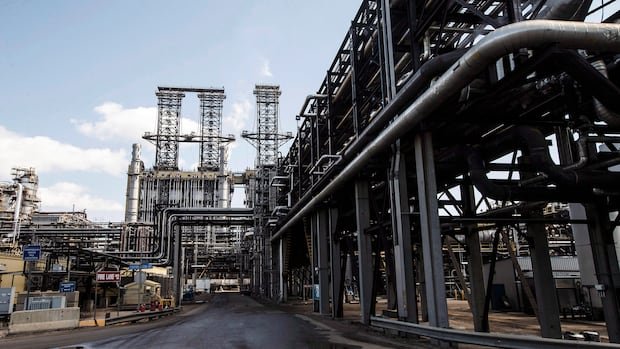
Notably, the oil and gas industry remains a significant emitter in Canada, with emissions on the rise since 2024, particularly in Alberta and British Columbia. Factors such as the expansion of pipelines and new export facilities have contributed to this trend. Emissions from oilsands production, a major contributor to overall emissions, have been steadily increasing, offsetting gains made in other sectors like transportation and buildings.
Without addressing emissions from oilsands production, Canada’s overall emission levels are unlikely to see substantial improvements, according to Sawyer. The current trajectory indicates a persistent challenge in meeting emission reduction goals in the foreseeable future.