
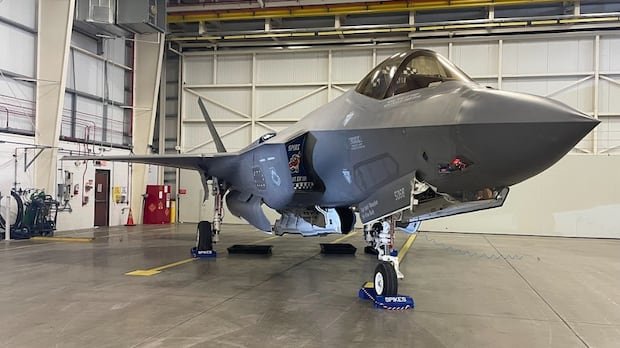

U.S. Ambassador to Canada Pete Hoekstra has issued a warning regarding the future of the North American defence agreement if Canada does not proceed with acquiring 88 F-35 fighter jets. Hoekstra emphasized that modifications would be necessary for the North American Air Defence Command (NORAD) if Canada does not enhance its fleet of F-35s beyond the current 16 on order. He suggested that the U.S. might need to increase its own procurement of advanced fighter jets and conduct more frequent flights into Canadian airspace to address potential threats.
NORAD, a longstanding partnership between Canada and the United States, is responsible for monitoring incoming threats and dispatching armed jets for interception when needed. Recent incidents have seen U.S. military aircraft entering Canadian airspace in response to various security challenges.
Hoekstra indicated that if Canada opts for a different aircraft, such as Sweden’s Gripen jets, the existing defence relationship would need to be reevaluated. Concerns were raised by experts like Andrea Charron from the University of Manitoba’s Centre for Defence and Security Studies, emphasizing the importance of maintaining NORAD’s mission despite potential disagreements.
The debate over Canada’s fighter jet selection has intensified, with Ambassador Hoekstra highlighting the technical and military advantages of the F-35 over the Gripen. However, some critics view his statements as a political maneuver to pressure the Canadian government. Meanwhile, Denmark, regretting its F-35 purchase due to diplomatic tensions, has urged Canada to consider other options.
While a majority of Canadians support incorporating the Gripen into the fighter fleet, concerns remain about the logistical challenges of maintaining two different types of aircraft. The decision between the Gripen and the F-35 carries significant implications for Canada’s defence capabilities and its alignment with U.S. military operations.
As discussions continue on Canada’s fighter jet future, the potential repercussions of different procurement choices on the NORAD partnership and broader security strategies remain a key point of contention.