
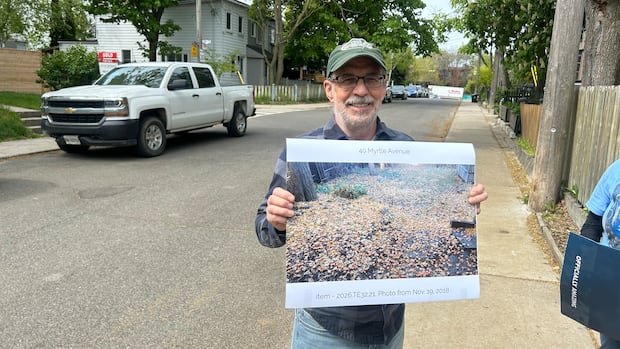

In Toronto, a non-native ginkgo tree is causing a stir among residents due to its pungent fruit. Alan Page and his wife, longtime residents in Leslieville, have faced issues with their backyard ginkgo tree as its fruit, which emits a sticky and foul odor akin to a mix of dog excrement and vomit, has become a nuisance. The unpleasant smell, combined with the stickiness that attracts insects like bees and wasps, has prompted residents to seek permission from city councillors to remove the trees, despite their overall health.
Page’s request to have the tree removed was denied by city forestry staff earlier this year. His appeal is set to be reviewed by the Toronto and East York Community Council, with staff recommending against its removal. The ginkgo tree, located on Myrtle Avenue, is deemed valuable for its contribution to the urban forest, providing aesthetic and environmental benefits to the community.
Councilor Josh Matlow has advocated for finding solutions to assist homeowners dealing with the ginkgo trees and their malodorous fruit. With an estimated thousands of ginkgo trees in the city, homeowners are grappling with the sudden appearance of fruit due to the maturation of female trees. Currently, homeowners must obtain a permit to remove trees exceeding 30 cm in diameter, with fines up to $100,000 for bylaw violations.
As part of a city initiative to increase tree canopy coverage, Matlow is pushing for more immediate measures to address the ginkgo tree issue. Neighbors like James Chiu have supported Page’s appeal, noting the inconvenience caused by the ginkgo fruit in their yards and homes. If approved, Page plans to replace the tree with five new ones as suggested by city staff.
Despite the challenges posed by the ginkgo trees, arborist Marc Ambeau advises homeowners to appreciate the trees’ benefits, such as shade and wildlife habitat, while learning to coexist with their seasonal drawbacks.