
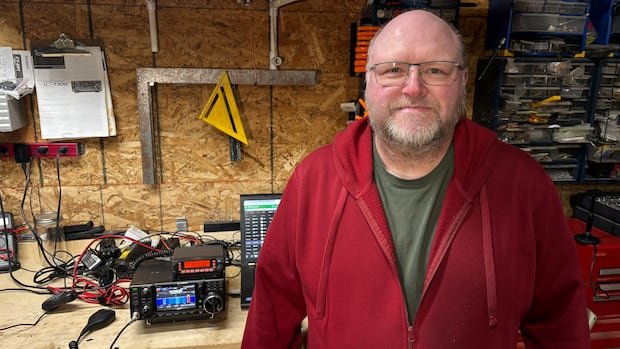

Joe Waldner recalls the evening in August when a radio in his residence near Saskatoon suddenly blared an alert message. “I rushed to my computer, checked my radar, and realized that this storm was going to be severe,” Waldner recounted. The alert was for an intense storm system that unleashed large hail, strong winds, and even a tornado over central Saskatchewan. But now, Waldner finds himself without a means to receive alerts like he did that fateful August night.
Environment and Climate Change Canada (ECCC) has closed down its national Weatheradio service, which consisted of over 200 stations, including 11 in Saskatchewan. This service provided round-the-clock updates on current conditions and forecasts in English and French. Weather alerts would interrupt regular forecasts during severe weather events, triggering alarms on specialized radios like Waldner’s to grab people’s attention.
ECCC stated that the Weatheradio service, operational since 1976, was becoming financially unsustainable. “The maintenance of the technology and services for Weatheradio has become increasingly difficult,” the statement explained. The closure of Weatheradio follows the shutdown of ECCC’s province-specific weather accounts on X (formerly Twitter) and Facebook, which have been consolidated into one corporate account to streamline access to weather information.
Amateur radio enthusiast Waldner expressed disappointment at the discontinuation of Weatheradio, emphasizing its importance among ham radio operators. Trent Walton, president of the Regina Amateur Radio Association, highlighted the service’s significance, particularly in areas with limited or no cell service, and as a vital communication tool during cell tower outages.
To enhance the national public alerting system, ECCC is collaborating with Public Safety Canada to strengthen Alert Ready, ensuring swift dissemination of weather warnings. Meanwhile, individuals like Justin Oertel, who relied on ECCC’s province-specific weather accounts for accurate weather information, are concerned about potential misinformation on social media platforms.
While the closure of Weatheradio and province-specific weather accounts presents challenges, efforts are underway to fill the void. Waldner and a group of amateur radio operators in Saskatchewan are exploring the establishment of a severe weather monitoring program to share weather updates using the Internet Radio Linking Project. This initiative aims to bridge the gap left by the absence of Weatheradio and ensure timely weather information dissemination.