
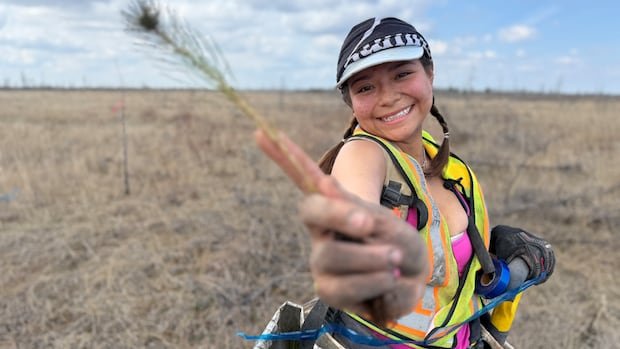

Marley Moose, a 22-year-old, is currently engaged in her third summer endeavor of tree-planting in the forests of northern Manitoba. Her mission is to aid in the restoration of areas ravaged by wildfires and rekindle the once vibrant ecosystems. However, this task has become increasingly difficult following the discontinuation of a government initiative targeting the planting of two billion trees by 2030.
The forest in Manitoba’s Interlake region suffered severe damage in 2016 due to a jack pine budworm infestation and faced further devastation in 2021 when wildfires swept through the Devils Lake area. The destruction continues, with areas to the north currently ablaze.
Marley Moose expressed her emotional connection to the land and her involvement in the tree-planting efforts facilitated by Nekoté LP, an Indigenous-owned corporation representing Swampy Cree First Nations. She emphasized the importance of caring for the earth, highlighting the reciprocal relationship between nature and humanity.
According to the Canadian Tree Nursery Association (CTNA), Canada is losing trees at an alarming rate primarily due to deforestation, insect infestations, and wildfires. The aftermath of wildfires alone necessitates the planting of 7.3 billion seedlings to restore a mere 15% of the affected areas.
The CTNA’s ambitious reforestation efforts, spearheaded by the 2 Billion Trees Program, were abruptly halted last fall by Prime Minister Mark Carney’s administration as part of budget reallocation initiatives. This decision has jeopardized projects like the Nekoté LP tree-planting initiative, which are crucial in the face of escalating wildfire threats and environmental challenges.
With the cancellation of the program, industry experts like Doug Hevenor stress the urgent need for collaborative solutions to mitigate the adverse impacts of dwindling tree cover and escalating wildfires. The collective efforts of seed producers, foresters, and tree planters are crucial in addressing the ecological crisis exacerbated by the program’s termination.
As the future of tree-planting initiatives hangs in the balance, project manager Farron Sharp from the Blue-Green Planet Project is actively seeking alternative funding sources to sustain their reforestation goals. The goal of planting 20 million trees by 2030 remains a priority, emphasizing the significant role of reforestation in combating climate change and restoring damaged ecosystems for future generations.