
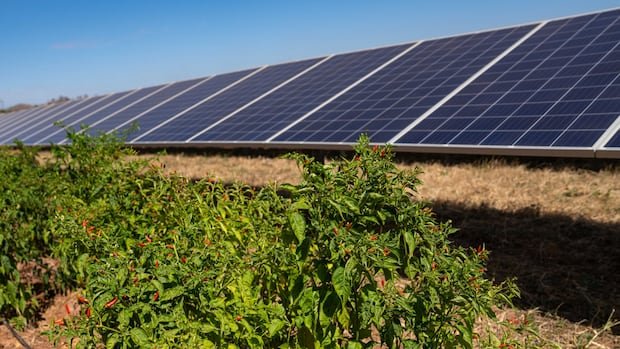

In the realm of solar power, a Canadian company has made significant strides in Malawi, a country in need of electricity access. JCM Power, based in Toronto, constructed two solar power plants, marking a milestone for Malawi’s energy sector. The Salima solar plant, a 60-megawatt facility co-owned with InfraCo Africa Ltd., became Malawi’s inaugural solar plant in 2021. Following this success, the Golomoti plant was established a year later, featuring a five-megawatt battery, a pioneering energy storage system for utility-scale projects in sub-Saharan Africa. These developments are crucial as, until recently, less than 16% of Malawians had access to electricity.
The road to solar energy in Malawi faced obstacles, mainly due to the absence of regulations for solar projects in the country. Loris Andrys, a senior business developer at JCM Power, described Malawi as a “frontier market” where establishing solar projects required navigating regulatory challenges. Additionally, the volatility of the Malawian kwacha, the local currency, posed a financial hurdle for JCM Power. To address this issue, the company ventured into community farming of African bird’s eye chili peppers around the solar panels. The chili peppers are then sold in U.S. dollars, primarily to Nando’s Peri-Peri, a renowned chicken restaurant chain.
Africa presents a vast opportunity for solar energy, boasting 60% of the world’s best solar resources, particularly in regions near the equator with minimal dust and cloud cover. The continent aims to connect over 600 million people without electricity access by 2030, aligning with the UN’s universal access goal. The demand for power in Africa is projected to surge eight-fold by 2050, emphasizing the urgency to transition towards renewable energy sources like solar.
Private investments are increasingly driving the growth of solar projects in Africa, complemented by foreign funding for large-scale installations. JCM Power, backed by five development banks including FinDev Canada, is actively expanding its solar ventures across various African countries beyond Malawi. The company remains committed to Africa, acknowledging the transformative impact of their projects on local communities.
In a similar vein, Vancouver’s Stardust Solar Energy has ventured into the African market, launching its first franchise in Zambia. The company’s franchise model not only accelerates energy deployment but also fosters local economic growth and professional development within communities. The expansion of solar projects in Africa underscores the continent’s potential for sustainable energy solutions and economic empowerment.
However, as solar development accelerates, experts emphasize the importance of responsible and sustainable practices to mitigate adverse environmental and social impacts. Development banks play a critical role in promoting guidelines for sustainable solar projects, emphasizing local benefits and community engagement. By aligning solar deployment with local needs and industries, stakeholders believe that solar energy can create lasting value and positively impact African communities.