
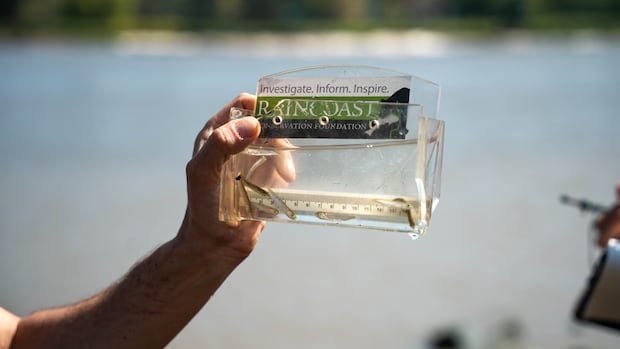

Juvenile chinook salmon in the Fraser River estuary have been found to contain a variety of chemicals, including pharmaceuticals and flame retardants. Research conducted from 2019 to 2021 revealed over 80 contaminants in the salmon tissue alone, with industrial and wastewater sites upstream believed to be the sources. Water samples from salmon habitats also showed the presence of 130 contaminants.
The study, led by the Raincoast Conservation Foundation (RCF), monitored the Harrison River chinook stock, focusing on their tissue and habitat at various locations. Priority contaminants, such as organic chemicals and pharmaceuticals, were discovered, with PBDE-penta-total, a flame retardant, being the sole priority contaminant found in salmon tissue samples. Cocaine and pesticides were among the other priority contaminants found in habitat water samples. Additionally, eight “watchlist” chemicals posing biological risks were detected in salmon tissue samples, including pesticides and pharmaceuticals.
Funded primarily by the Department of Fisheries and Oceans, the research was a collaboration between the RCF and Simon Fraser University. Assistant professor Tanya Brown highlighted the concerning exposure of fish to numerous chemicals not covered in the study, emphasizing the alarming combination of these substances. Similar initiatives in Washington state’s Puget Sound have shown synthetic organic chemicals hindering chinook growth, potentially leading to long-term impacts on the ecosystem.
The study’s findings could influence future chemical management strategies, whether through public policies or individual actions. Researchers underscored the importance of responsible disposal of pharmaceuticals at the individual level, considering the high priority of certain pharmaceutical contaminants detected in the study.