
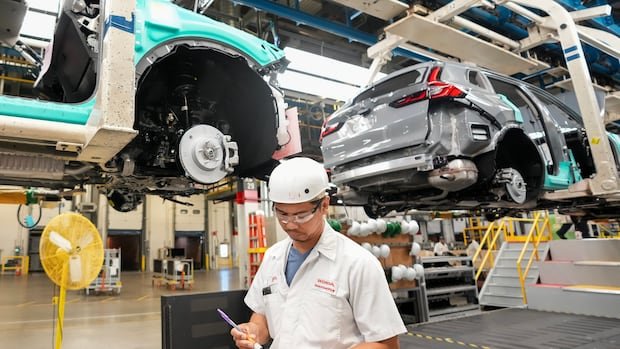

Honda has put on hold its $15-billion electric vehicle project in Ontario indefinitely due to changing business circumstances. Last May, the Japanese automaker announced a pause in development at the plant, with intentions to reevaluate the EV market in two years. Reports last week from Japanese media indicated a more definitive suspension of the plant, which Honda did not confirm at the time.
In a statement on Thursday, Honda explained, “Based on our revised strategic objectives, we have decided that an indefinite suspension of the value chain project is appropriate at this stage. We will continue to assess our future procurement and business strategies, closely monitoring market conditions.” The company assured that the pause would not affect current jobs or production levels at its Alliston, Ont., manufacturing facility.
The planned EV complex had the potential to generate around 1,000 manufacturing jobs and produce 240,000 vehicles annually by 2028. Initially announced in April 2024, the project involved pledges of financial support from then-Prime Minister Justin Trudeau and Ontario Premier Doug Ford, with both Ottawa and Ontario committing $2.5 billion each. However, Honda stated in the Thursday announcement that it had not yet received the promised government funding.
Honda recently reported a $3.68 billion loss, its first-ever full-year loss amounting to 423.9 billion yen. The company attributed the substantial loss largely to unmet expectations in the EV sector, citing a significant decline in EV demand due to regulatory rollbacks in the U.S. and other factors. Despite this setback, Honda’s CEO Toshihiro Mibe affirmed the company’s commitment to carbon neutrality by focusing more on hybrid development and production.
Greg Layson, digital editor for Automotive News Canada, highlighted the impact of reduced EV incentives and American automotive tariffs on Honda’s financial woes. The indefinite pause on the EV project signifies a reset on investment commitments without immediate repercussions on Ontario jobs. Prime Minister Mark Carney expressed disappointment at the announcement but emphasized the ongoing global shift towards lower emission vehicles, underscoring the importance of Canadian choices in this transition.
Brendan Sweeney, president and CEO of the Pacific Manufacturing Association of Canada, stressed the importance of securing a stable trade relationship with the U.S. for the benefit of Canadian automakers like Honda. Sweeney noted the strong demand for hybrid vehicles in Canada and urged for clarity in trade agreements to support the automotive industry.