
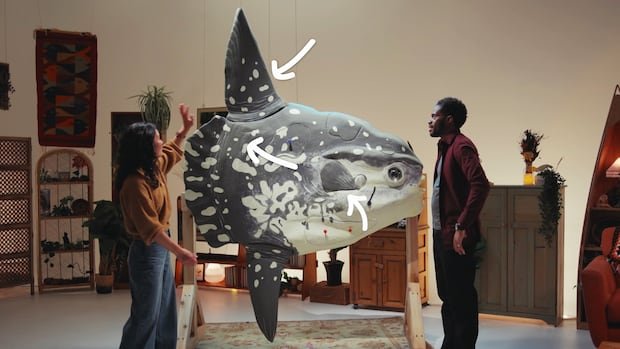

The ocean sunfish, a creature that can weigh up to two tonnes and is covered in parasites, may not fit the typical image of a fish. Host Sarika Cullis-Suzuki explores this unusual fish in a detailed examination on The Nature of Things 101. Describing the Mola mola as the opposite of a conventional fish, Cullis-Suzuki highlights its unique features like a circular body, lack of a tail, and large fins.
Through a life-size model demonstration, Cullis-Suzuki showcases why the Mola mola, a type of ocean sunfish and one of the largest fish in the sea, is often overlooked. These fish are known for their long-distance travels, diving hundreds of meters deep multiple times a day in search of food. However, due to their slow movement, large surface area, and passage through various water zones, they attract parasites.
Cullis-Suzuki reveals that parasites infest the Mola mola extensively, from the skin to the eyeballs, and even inside the mouth and intestine. With 73 different parasite species identified on the Mola mola and other ocean sunfish types, some parasites even host other parasites. To combat these infestations, sunfish breach, jumping out of the water and slamming back down, potentially to dislodge parasites. They also allow smaller fish and birds to feed on the parasites.
Despite the existing knowledge about ocean sunfish, Cullis-Suzuki emphasizes the need for further research on this intriguing species. She mentions that there is still much more to uncover about these peculiar fish. To learn more about the ocean sunfish, viewers can watch The Nature of Things 101 on CBC Gem or The Nature of Things YouTube channel.