

The WNBA has witnessed a significant surge in popularity in recent years, reflected in its recent lucrative media rights deals totaling $3.1 billion US. However, along with this success, the league has become embroiled in broader cultural debates, with the latest controversy revolving around the inclusion of transgender athletes in sports.
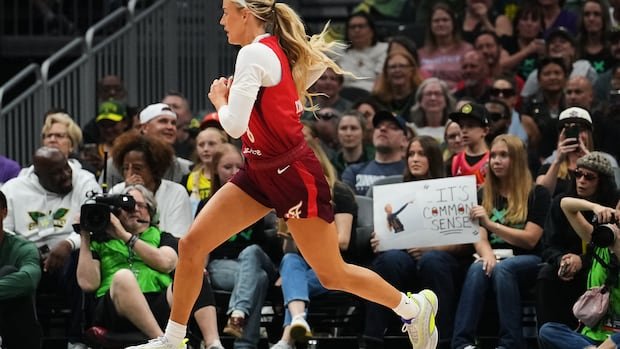
The issue gained attention when Indiana Fever player Sophie Cunningham expressed her support for excluding transgender girls and women from women’s sports, sparking a heated online debate. This debate has been a contentious topic in the U.S. since President Donald Trump’s executive order restricting trans individuals from participating in women’s sports.
During a recent game between the Fever and Seattle Storm, the controversy spilled outside the arena, where a rally endorsed Cunningham’s stance and advocated for a state proposal in Washington aiming to restrict transgender students from competing in girls’ athletics. Inside the arena, a Storm player donned a trans rights shirt, while Cunningham faced backlash from spectators and the Storm co-owner, Celeste Keaton, received a suspension for a confrontation with fans supporting Cunningham.
Cunningham condemned the co-owner’s behavior, emphasizing inclusivity and respect for all individuals. The incident at the game and Cunningham’s remarks have stirred debates on various platforms, including Fox News and statements from White House spokesperson Karoline Leavitt.
The WNBA’s involvement in such controversies is not new, with past incidents highlighting tensions within the league. The ongoing debates around transgender rights and other social issues reflect a broader discourse within the league and society at large.
As the WNBA continues to grow in prominence, these social and political dimensions are becoming increasingly intertwined with the sport, underscoring the complex landscape facing women athletes and the ongoing struggles for equity and inclusion.