
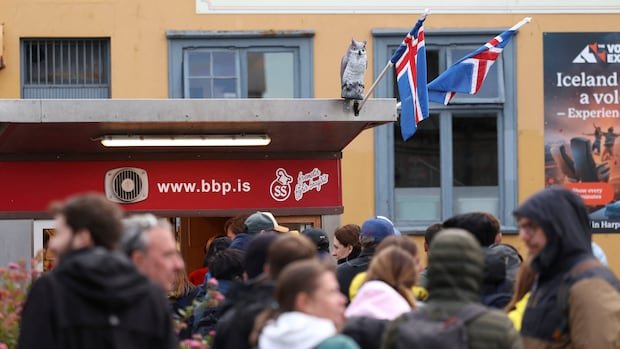

Icelandic voters have chosen to remain outside the European Union, the results of a recent referendum revealed on Sunday. The decision came as a rejection of the government’s efforts to initiate discussions on EU membership, with concerns raised about the critical importance of Iceland’s fishing grounds.
The island nation, with a population of 400,000, has been deliberating over EU accession for more than ten years. Initial expectations had leaned towards a narrow majority in favor of opening membership negotiations, but recent opinion polls indicated a shift in sentiment.
In the referendum held on Saturday, 52.8% of votes were against the government’s proposal to engage in talks with Brussels, while 47.2% were in favor. Notably, 82.5% of eligible voters participated in the referendum, according to reports from public broadcaster RUV and other Icelandic media outlets.
Among the six constituencies, only the central Reykjavik areas demonstrated majority support for the proposal, while rural regions and suburban Reykjavik voted against it.
The government positioned EU membership as a defense against trade disputes and Arctic tensions, presenting the referendum as a decisive moment. Prime Minister Kristrun Frostadottir warned that a “no” vote would halt discussions as long as her center-left coalition remained in power.
In Brussels, some officials had hoped that Iceland’s potential accession could alleviate skepticism towards EU enlargement and strengthen the bloc strategically amid growing Arctic security concerns. The debate in Iceland also touched on security issues, particularly in light of doubts raised by U.S. President Donald Trump regarding NATO commitments and his interest in acquiring Greenland.
However, for many Icelanders, the focus was primarily on the fishing industry. Fishing plays a significant role in Iceland’s economy, contributing 15% to the GDP and accounting for around 40% of export earnings.
The issue of interest rates and living costs featured prominently ahead of the referendum, with Iceland grappling with high inflation and interest rates. Proponents of EU membership suggested that joining the EU and potentially adopting the euro could offer economic relief, given the disparity in interest rates between Iceland and the European Central Bank.
Despite economic arguments in favor of EU membership, opposition leader Gudrun Hafsteinsdottir, who led the “no” campaign, emphasized that Icelandic politicians should address the country’s challenges rather than relying on Brussels for solutions.
As the referendum results reflected Iceland’s decision to maintain independence, some officials expressed confidence that Iceland’s fishing rights would remain under national control based on historical precedence. However, concerns were raised about potential future EU regulations impacting Iceland’s fishing industry.