
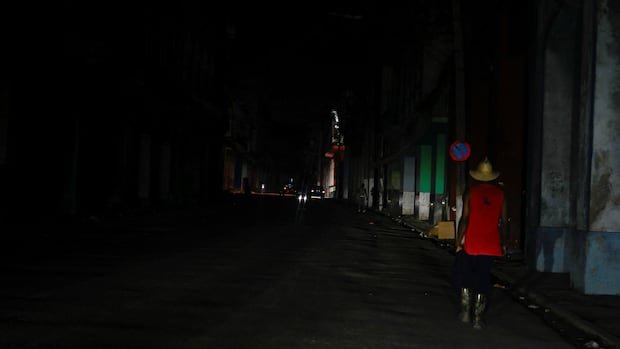

Officials in Cuba have reported a widespread blackout across the island, underscoring the deepening energy and economic crises in the nation of approximately 11 million people. The Ministry of Energy and Mines announced a “complete disconnection” of the national electrical system, launching an investigation into the incident. Lázaro Guerra, the ministry’s electricity director, mentioned that efforts were underway to restart several key thermoelectric plants to facilitate the restoration of power.
This recent blackout marks the third major outage in Cuba within the past four months, exacerbating the challenges faced by residents. The ongoing power disruptions have led to significant hardships, with citizens like 61-year-old Tomás David Velázquez Felipe expressing frustration over the situation and contemplating the idea of leaving the island due to the adverse effects on daily life.
By Monday night, state-owned media reported that power had been restored to 5% of Havana’s population, encompassing around 42,000 customers and multiple hospitals. Priority was given to restoring power to essential sectors, with a cautious approach due to the risk of further failures in the fragile system.
The deteriorating state of Cuba’s aging electrical grid has led to a surge in daily outages and large-scale blackouts. While internal factors contribute to the crisis, the Cuban government has also attributed part of the problem to a U.S. energy blockade initiated by former President Donald Trump, who proposed imposing tariffs on countries supplying oil to Cuba.
President Trump’s administration has exerted pressure on Cuba, demanding political reforms and raising the prospect of a “friendly takeover” of the nation. The U.S. administration seeks a shift in leadership within Cuba, aiming for political and economic liberalization in exchange for sanctions relief. These developments have heightened tensions between the two countries, with implications for Cuba’s future trajectory.
Amidst the challenges, William LeoGrande, an expert on Cuban affairs, highlighted the urgent need for infrastructure improvements and sustainable solutions to address the energy crisis. The reliance on outdated systems and the lack of maintenance pose significant risks to the population’s well-being and the country’s stability in the long run.
As Cuba grapples with ongoing blackouts and critical shortages, the government is exploring strategies to mitigate the crisis and stimulate economic recovery. Efforts to enhance energy sustainability and engage in international partnerships, such as with China for renewable energy projects, are crucial steps in navigating the current challenges.
In response to the escalating situation, Canada recently announced $8 million in aid to support Cuba’s food security and address the humanitarian crisis on the island. The international community’s assistance is essential in alleviating the hardships faced by the Cuban population and fostering resilience in the midst of adversity.