
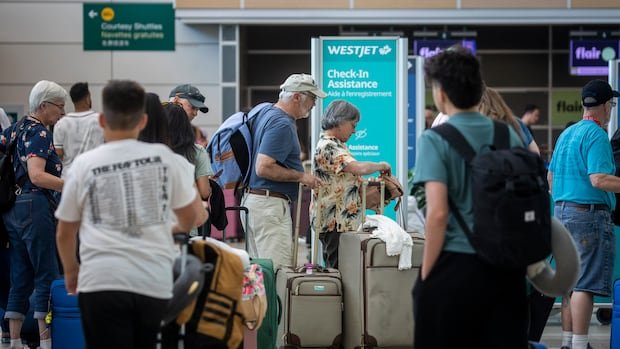

WestJet flight attendants are gearing up for a potential strike starting on Sunday if a resolution is not reached by then, causing concern among passengers. The Canadian Union of Public Employees (CUPE), representing 4,400 WestJet flight attendants, issued a 72-hour strike notice, to which WestJet responded with a lockout notice. While the strike notice does not guarantee a walkout, there are significant differences between the two parties on key issues.
Passenger Ken Wallin, who is set to travel to Ireland with his wife for their 29th wedding anniversary on Monday, is anxious about potential disruptions. Having saved for this trip after canceling their previous plans due to the pandemic, Wallin fears another canceled vacation if the strike occurs.
As travelers like Wallin navigate these uncertainties, alternative travel arrangements become necessary. However, finding reasonably priced direct flights with other airlines proves challenging. While WestJet offers flexibility for affected passengers to switch or cancel their bookings at no cost, some passengers like Wallin may only receive a travel credit, which may not be a preferred option for infrequent flyers.
Meanwhile, passenger Armin Ataee, facing a tight schedule for an upcoming conference, had to rebook his WestJet return flight and incur additional costs. While acknowledging the value of the credit, Ataee expressed frustration at not receiving a cash refund as initially expected.
WestJet’s announcement reiterated the options available to passengers for rebooking or canceling flights without additional charges. However, specific fare types are eligible for cash refunds, while others receive travel credits instead, limiting flexibility for travelers. Travel expert T.J. Dunn highlighted potential limitations with travel credits, emphasizing the constraints they impose on future bookings.
In light of the looming strike, passengers are advised to explore alternative flight options and monitor their travel plans closely. With ongoing negotiations and potential flight cancellations, travelers may face challenges in securing suitable alternative arrangements, especially during a busy travel period.
As WestJet passengers brace for possible disruptions, the impasse between the airline and its flight attendants underscores the pressing need for a resolution. Amidst the standoff over fair pay, both parties are under pressure to find common ground. Labor scholar Barry Eidlin noted that such high-pressure situations often pave the way for eventual agreements, potentially averting a strike scenario.
The core issue of fair pay remains a sticking point in the negotiations, with flight attendants citing unpaid hours under the current credit hour system. WestJet defends this system as industry standard, arguing that flight attendants are adequately compensated for additional duties. The dispute mirrors past labor conflicts in the aviation industry, highlighting the significance of fair compensation for ground duties and other unpaid work.
Overall, the looming strike at WestJet underscores the importance of timely resolutions in labor disputes to mitigate disruptions for passengers and industry stakeholders alike.