
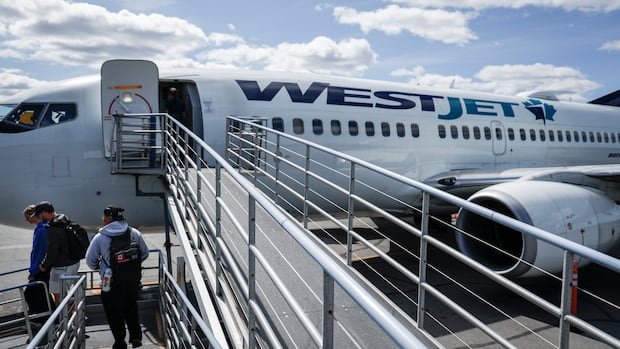

WestJet has reached a $4.5 million settlement to resolve a sexual harassment class-action lawsuit filed by over 3,000 flight attendants a decade ago. The lead plaintiff and her attorney confirmed that a B.C. judge recently approved the finalized settlement terms. WestJet expressed satisfaction with the agreement.
The lawsuit stemmed from an incident in 2010 when former flight attendant Mandalena Lewis accused a pilot of sexually assaulting her during a layover in Hawaii. Subsequently, additional female employees of the airline came forward following the lawsuit’s initiation in 2016. The B.C. Court of Appeal certified the case as a class action in 2022.
The flight attendants alleged that WestJet had not created a safe work environment with adequate measures to prevent harassment. Lewis, speaking to CBC News, expressed relief at the case’s conclusion but felt the settlement did not deliver complete justice. She noted disappointment in the nominal dollar amount and WestJet’s lack of admission of wrongdoing in the agreement.
The $4.5 million settlement will be divided among 3,452 flight attendants after deducting expenses, including legal fees. Each flight attendant’s share is estimated to be around $400. Lewis mentioned that the judge reduced her honorarium from $20,000 to $10,000 as part of the settlement.
WestJet stated its commitment to enhancing operations and training to prioritize the safety and well-being of its employees. As part of the settlement, the airline will engage a third-party consultant to assess the workplace for harassment prevalence, underreporting extent, and improvements to reporting and response mechanisms.
Lewis described the legal process as a “nightmare,” highlighting the pervasive issue of sexual assault and harassment faced by female flight attendants in the airline industry. She emphasized taking a stand against the problem for herself and her colleagues who have endured similar experiences.
According to legal experts, the settlement appears favorable for WestJet as it resolves potential individual claims and could prevent costlier outcomes. The agreement also serves as a deterrent to future misconduct by demonstrating the repercussions of such behavior.