
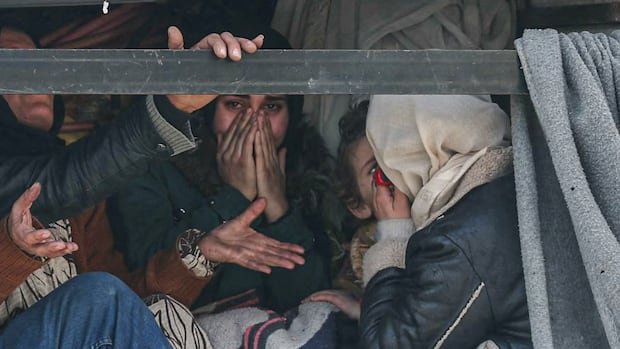

Violent clashes between the Syrian army and the Kurdish-led Syrian Democratic Forces (SDF) have heightened in Aleppo’s northern region, now in its third day, leading to the displacement of tens of thousands of civilians. Syrian authorities advised civilians to evacuate a contested area in Aleppo, signaling the start of “targeted operations” against the SDF in Sheikh Maqsoud, Ashrafieh, and Bani Zaid neighborhoods. The conflict, which began on Tuesday, has resulted in multiple casualties and numerous injuries.
Both sides have accused each other of deliberately attacking civilian areas and infrastructure in this deadly confrontation, posing a significant challenge for Syrian President Ahmed al-Sharaa, who aims to unify the country following 14 years of war. Save the Children estimates that over 16,000 civilians, including many children, have fled Aleppo in the past 24 hours, while others remain in their homes facing shortages of essential supplies.
The Aleppo directorate of social affairs and labour estimates around 140,000 internally displaced persons in the province, with a significant number facing medical challenges, especially the elderly, women, and children. The conflict has resulted in civilian casualties on both sides, with reports of fatalities and injuries.
The United Nations has expressed concerns over the escalating violence and called for de-escalation. UNICEF is providing aid to displaced families by distributing hygiene kits in shelters across the province, scaling up its response as the situation unfolds.
The Syrian Democratic Forces (SDF) is a U.S.-backed coalition controlling parts of northeastern Syria, pivotal in the fight against ISIS. The SDF, established during Syria’s prolonged war, has resisted full integration into the current government, leading to ongoing tensions.
The recent clashes in Aleppo follow stalled political negotiations between the central state and the SDF. Efforts to merge the SDF with the Syrian army by the end of 2025 have faced obstacles, with disagreements on the integration process. The situation has drawn attention from the U.S., which is monitoring developments and advocating for restraint among all parties involved.
Turkey perceives the SDF as a terrorist group due to its ties with the Kurdistan Workers’ Party, prompting concerns of further violence and potential Turkish involvement. Turkey’s Ministry of National Defence stated that the current operation in Syria is solely led by the Syrian army, with Turkey closely observing the situation and offering support if requested.