
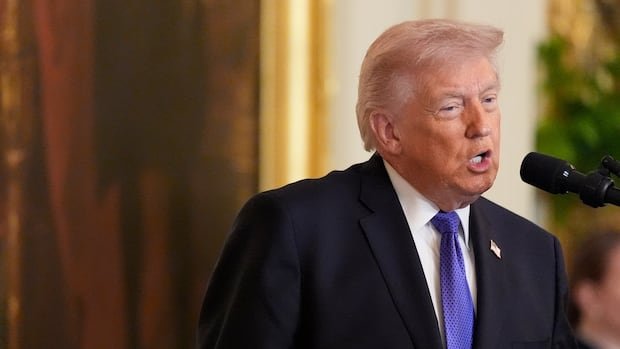

President Trump has outlined his goals for the Iran conflict, but there are conflicting messages from him and his team regarding the justification for the war and its expected duration. Speaking during a Medal of Honor ceremony at the White House, Trump expressed confidence in prevailing easily. However, he also indicated readiness to extend the conflict beyond the initially projected four to five weeks if necessary.
Two recent polls conducted after the airstrikes indicate that Trump faces challenges in garnering support for the war among Americans. A Reuters/Ipsos poll revealed that only 27% of respondents approved of the strikes on Iran, while a CNN poll showed that 41% supported the military action.
The ongoing conflict coincides with a drop in Trump’s overall approval rating, raising concerns as the crucial midterm elections approach, with control of Congress at stake.
Republican strategist Jason Roe highlights the political risk for Trump, which hinges on the war’s outcome. The success of breaking Iran without terrorist threats to the U.S. or its allies could be a win for Trump, whereas a prolonged conflict with ground forces involved could become a liability.
Trump has outlined four objectives for the conflict, including destroying Iran’s missile capabilities, annihilating its navy, preventing nuclear weapon acquisition, and cutting support for terrorist groups. Despite these goals, regime change is notably absent from the list, although the killing of Iran’s Supreme Leader Ali Khamenei in the initial strikes hints at a desire for a change in government.
Analysis suggests that the conflict may not resolve quickly, with efforts to shape a new regime potentially lasting months or longer, especially without a significant ground presence. Trump and his administration have not ruled out the deployment of troops into Iran, emphasizing a commitment to advancing American interests.
As the war unfolds, concerns arise over potential economic impacts and higher energy costs for Americans. Democratic leaders, including Chuck Schumer, have voiced opposition to the conflict, citing concerns over American lives lost and increased taxpayer expenses.
Secretary of State Marco Rubio and Secretary of War Pete Hegseth provided varying reasons for the military operation, focusing on imminent threats and the need to neutralize Iran’s missile capabilities. Trump underscored the goal of regime change, emphasizing the elimination of threats posed by the current Iranian government.
The war in Iran raises complex questions about sustained military operations and the transformation of the country, with public sentiment likely to shape the direction of the conflict in the upcoming period.