
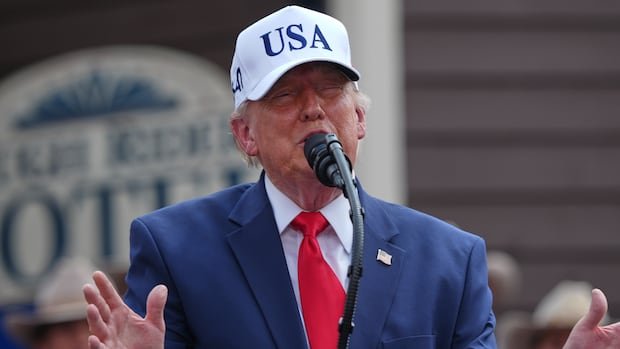

The announcement made by the Trump administration on Wednesday, declining to join Canada and Mexico in extending the three-country free trade deal as expected, was not surprising. The future of the renegotiation of the Canada-United States-Mexico Agreement (CUSMA) is uncertain. However, it is confirmed that the agreement will remain in effect during the negotiation period, as it is valid for another 10 years unless an official six-month withdrawal notice is issued, which President Donald Trump has not threatened.
Political considerations within the U.S. are preventing the White House from terminating the trade agreement. CUSMA enjoys broad support from Republicans in Congress, especially those representing agricultural states, according to trade expert Simon Lester. The administration aims to renegotiate certain terms of the agreement rather than tearing it up completely.
U.S. Trade Representative Jamieson Greer stated that the U.S. will work with Mexico and Canada to address the agreement’s shortcomings and trade deficits through potential protocols. While the Trump administration remains skeptical about reaching side deals with Canada and Mexico, there is an openness to continue negotiations to find common ground.
Canada-U.S. Trade Minister Dominic LeBlanc is willing to engage in bilateral discussions to address various issues. However, there are uncertainties regarding potential compromises on key trade disputes. The Trump administration’s priorities include increasing U.S.-made content in automobiles and gaining more access to Canada’s dairy market, while Canada seeks a reduction in U.S. tariffs on steel, aluminum, and autos.
There are doubts about the feasibility of significant concessions from Canada and Mexico as demanded by the U.S. Some experts anticipate ongoing negotiations beyond the U.S. midterms. The possibility of persistent renegotiations until the agreement’s expiry in 2036 exists, although a swift resolution is preferred by the U.S. administration to avoid prolonged talks.