
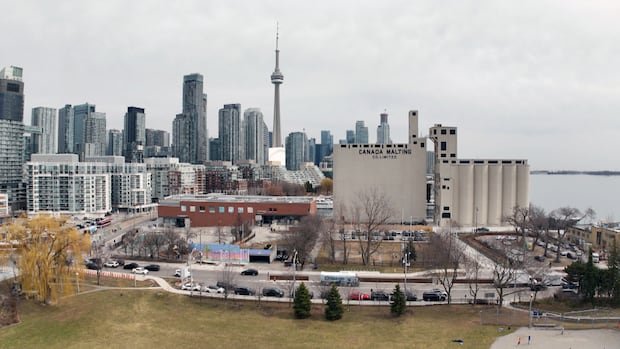

A few blocks away from Billy Bishop Airport in Toronto, Joan Prowse notices several of her neighbors dealing with health issues. Respiratory problems, cancers, and dementia cases are prevalent among them, including her neighbor Brenda Roman, who suffers from emphysema. Roman, expressing concern about the poor air quality in their neighborhood, believes it may be a factor in her illness. Scientists have identified high levels of ultrafine particles in their Bathurst Quay neighborhood, which are smaller pollution particles that can deeply affect the lungs and are associated with various health problems.
Recent plans by Ontario Premier Doug Ford to expand the city airport, located very close to Prowse and Roman’s residence, have raised worries among the community members. The proposal includes bringing in larger jets, potentially aggravating the existing air quality issues in the area. Joan Prowse, also the Chair of the Bathurst Quay Neighbourhood Association, sought answers regarding the air quality concerns in her vicinity and collaborated with Marianne Hatzopoulou, a transport and air pollution researcher at the University of Toronto.
Monitoring studies conducted by Hatzopoulou’s team revealed high concentrations of ultrafine particles originating from the Gardiner Expressway and Billy Bishop Airport in the neighborhood. These particles, which are smaller than PM2.5, were found to spike during airport operations, particularly during aircraft takeoffs and landings under specific wind conditions. The World Health Organization suggests that UFP levels exceeding 20,000 particles/cu. cm for a one-hour average are considered “high.”
Research indicates that chronic exposure to ultrafine particles poses significant health risks, potentially leading to premature deaths, lung cancer, and respiratory illnesses. Despite the evidence pointing to the harmful effects of UFPs, regulatory standards specific to these particles are lacking globally. Scientists emphasize the urgency of addressing UFP pollution and implementing measures to reduce exposure to safeguard public health.