
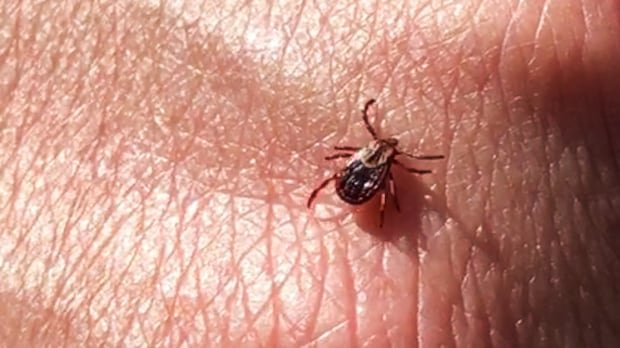

Wellington-Dufferin-Guelph Public Health now advises that the risk of encountering ticks is not limited to summer or grassy areas. They recommend conducting tick checks after any outdoor activity above 0°C. According to Phil Wong, the health unit’s operations director, data from a surveillance program revealed tick encounters expanding beyond wooded trails.
Tick exposure occurs in various settings, including parks, trails, campsites with tall grass, private properties, and occupational environments for outdoor workers. Wong noted an increase in tick submissions from people gardening or raking leaves at home. He reassured parents that playgrounds, even with wood chips, have low tick presence but advised checking children for ticks after outdoor play.
As the local tick population grows, Wellington-Dufferin-Guelph Public Health updated its guidance anticipating a steady increase in ticks from the U.S. Health Canada reports over 40 tick species in Canada, some native while others introduced by hosts like birds and deer. Certain ticks can transmit diseases such as Lyme disease and induce allergies, prompting the establishment of research centers like the Canadian Tick Research and Innovation Centre in Nova Scotia and the G Magnotta Lyme Disease Research Lab in Guelph.
Justin Wood, founder of Geneticks and a Lyme disease researcher, emphasized the importance of early diagnosis and intervention for tick-borne illnesses. Contrary to popular belief, ticks survive cold winters by hibernating in leaf litter, with minimal die-off. Public health encourages reporting ticks online for tracking purposes while reassuring the public to continue outdoor activities responsibly by performing tick checks.