
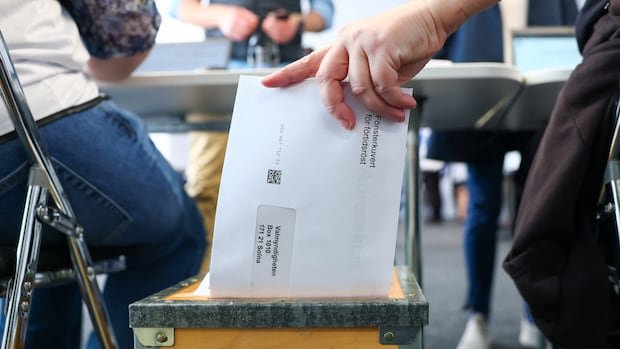

In Sweden, voters are heading to the polls on Sunday in a crucial election that could see a far-right party entering government for the first time or steering the country back towards its traditional liberalism.
Recent opinion polls indicate that Sweden’s centre-left opposition is slightly ahead of the ruling right-wing bloc, signaling a potential change in government after the September 13 parliamentary election. Prime Minister Ulf Kristersson, who has been trailing in polls during his four-year tenure, has been narrowing the gap in the final stages of the campaign, while his opponent Magdalena Andersson and the Social Democrats have seen a decline in support.
Advocates of the right-wing bloc argue that their policies have effectively reduced gang violence and significantly lowered immigration levels. They view a victory as an endorsement of their approach and a signal for continued similar measures in the future. Kristersson has emphasized the importance of unity among parties and voters to drive action and achieve results, highlighting his willingness to involve the far-right Sweden Democrats in a potential government.
Critics, however, argue that the current agenda is eroding civil liberties and pressuring immigrants to conform more strictly to Swedish cultural norms or face expulsion. They express concerns about the societal impact, economic implications, and the diminishing purchasing power of households.
The election outcome could have broader implications, especially in light of the rise of far-right parties across Europe. If the Sweden Democrats secure electoral success, it could resonate with other right-wing movements in the region. The right-wing bloc, led by Kristersson, has already set the groundwork for a coalition government involving four parties, while Andersson’s path to power appears less certain.
The election dynamics could hinge on whether the Liberals surpass the 4% vote threshold to secure parliamentary seats, bolstering the right-wing coalition that includes the Moderates, Christian Democrats, and the Sweden Democrats. The Sweden Democrats, initially founded by far-right extremists in the 1980s, have gained traction in recent years by highlighting concerns about immigration policies and their impact on crime rates.
Despite their differences, both political blocs have converged on key voter priorities such as support for Ukraine, military rearmament, and addressing the cost-of-living crisis. While there is general agreement on the need for increased welfare and public spending, divisions persist on various issues, including immigration policies and taxation. Forming a cohesive government may prove challenging, especially with differing stances on key issues and the reluctance of certain parties to align with one another.
As the election day unfolds, the results will not only shape Sweden’s political landscape but also have implications for the broader European political context.