
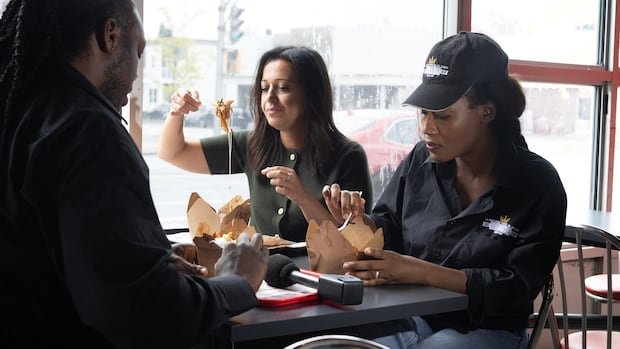

Days into the Quebec election campaign, Ruba Ghazal exited the Québec Solidaire campaign bus in Rouyn-Noranda, Quebec, and made her way into Chez Morasse, a renowned restaurant famous for its poutine. The party’s co-spokesperson indulged in a large serving of poutine before joining the restaurant managers and local QS candidate, France Marion, at a table. Instead of going directly to her seat, Ghazal took the time to engage with customers, addressing their inquiries about her party’s platform, emphasizing issues such as combating the high cost of living and housing problems to improve education.
Antonine Yaccarini, a political analyst, highlighted these interactions as part of the orchestrated routine of an election campaign. She explained that politicians often relish being seen enjoying local delicacies like poutine, engaging with voters in a more relaxed setting.
Ghazal was not the only party leader incorporating a poutine stop into their campaign activities. Following suit, the leader of Coalition Avenir Québec, Christine Fréchette, visited Ti-Oui Snack Bar in Saint-Raymond, where she interacted with patrons and served poutine, a quintessential Quebecois dish. Poutine and casse-croûtes play a significant role in Quebec culture, allowing politicians to convey a sense of approachability. However, this strategy can sometimes backfire.
Campaign teams strategically select locations like restaurants based on their ability to reach targeted constituencies and provide visually appealing content for media coverage. Yaccarini pointed out that with Quebec’s provincial elections typically occurring in the fall, outdoor events such as festivals and public markets serve as natural stops during the campaign trail.
Food columnist Charles-Alexandre Théorêt described election campaigns as a form of “seduction operation,” where food acts as a tool for politicians to demonstrate their relatability to voters. The historical use of food to shape a politician’s image, exemplified by Quebec Premier Robert Bourassa’s hotdog-eating portrayal in 1975, illustrates this strategy’s enduring relevance.
While culinary campaign stunts can create engaging moments, they also entail risks. Théorêt cited an incident during the 2025 federal election campaign involving Conservative Leader Pierre Poilievre’s pizza-making mishap, underscoring how such events can be interpreted positively or negatively by supporters and critics alike.
Moreover, cultural nuances, as seen in Liberal Leader Mark Carney’s cheese curd mishap in Shawinigan, emphasize the importance of understanding and acknowledging local customs to resonate with voters effectively. Authenticity in conveying messages through food choices, such as embracing Quebec’s iconic poutine, remains crucial for political candidates seeking to establish a genuine connection with constituents. Nonetheless, Yaccarini cautioned against insincerity, emphasizing that voters can discern staged gestures from genuine affinity, which could impact the campaign’s effectiveness.