
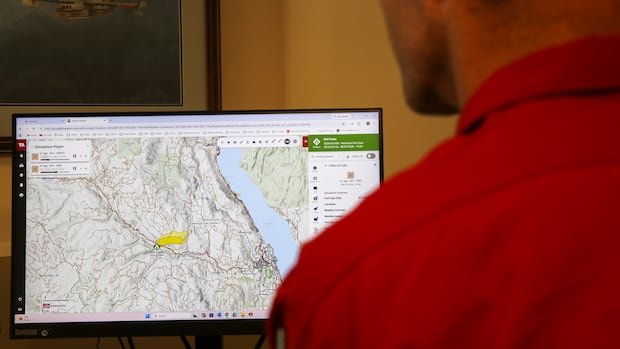

Neal McLoughlin, superintendent of predictive services at the British Columbia Wildfire Service (BCWS), is working on replicating the challenging Bald Range wildfire’s behavior in his modeling software based on the events that occurred in the Okanagan Valley on Aug. 7. By adjusting variables like extreme fire behavior, more flammable forest fuels, stronger winds, and different topography, McLoughlin’s simulations closely match the actual events that unfolded in Summerland that night, leading to the evacuation of over 12,000 residents and one fatality.
McLoughlin noted that observed fire behavior surpasses the predictions made by their models due to outdated data collected over 30 years ago when extreme fire occurrences were less frequent. The Southern Interior region of British Columbia, known as the driest area in Canada, experienced a wildfire season with below-average burned area but unprecedented property destruction.
The Canadian Forest Fire Danger Rating System serves as the foundation for wildfire evaluation nationwide, with efforts to update the Fire Behaviour Prediction System underway by 2029. However, incorporating data from intensely burning fires remains a challenge due to high costs and risks associated with data collection.
McLoughlin emphasized the need for more contemporary data collection on the ground to enhance prediction models and improve accuracy in forecasting wildfires, especially in the face of changing fire behavior patterns. The limitations of current systems, lacking data on extreme conditions, highlight the necessity for advancements in wildfire prediction technology to adapt to evolving fire dynamics.