
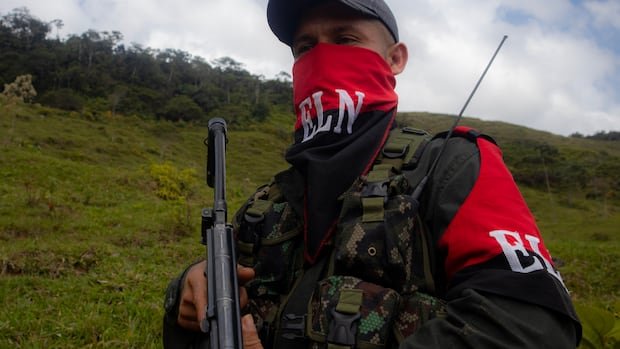

Local security experts warn that the recent U.S. attack on Venezuela has caused a shift in the dynamics of guerrilla groups operating along the border with Colombia. There are concerns about potential betrayal by Venezuelan officials, leading to increased movement of guerrilla forces in the region. The National Liberation Army (ELN), the most prominent guerrilla group in the area, has reportedly taken precautionary measures, such as closing camps in Venezuela and suspending training operations.
According to Jorge Mantilla, an expert in armed conflicts, the ELN is adapting its security protocols and social control mechanisms in response to the heightened tensions. The group has long been anticipating U.S. intervention in Venezuela, with previous warnings indicating a perceived threat to the country’s resources.
The attack has also raised the possibility of the ELN expanding its influence to become a continental guerrilla force. The fragmentation of the Venezuelan regime or the presence of U.S. military forces could provide the group with an opportunity to establish itself as a symbol of resistance across Latin America.
In a recent development, Ivan Mordisco, a leader of a splinter group from the disbanded Revolutionary Armed Forces of Colombia (FARC), has called for unity among guerrilla factions to resist the U.S. However, doubts have been raised about Mordisco’s credibility and trustworthiness due to his criminal background.
The ELN, with a significant presence in both Colombia and Venezuela, has a long-standing relationship with the Venezuelan regime, sharing similar political ideologies. The group controls vast border territories and relies on activities like illegal mining and drug trafficking for revenue. The ELN’s historical ties to Venezuela date back to the Chavez era and have evolved into a strategic partnership aligned with the Bolivarian Revolution.
As tensions escalate, efforts to combat guerrilla groups are intensifying, with the U.S. and Colombian governments collaborating to address the security challenges posed by these armed factions. However, some voices advocate for a holistic approach to peacebuilding in the region, emphasizing community empowerment and human rights protection as essential components of a sustainable peace strategy.