
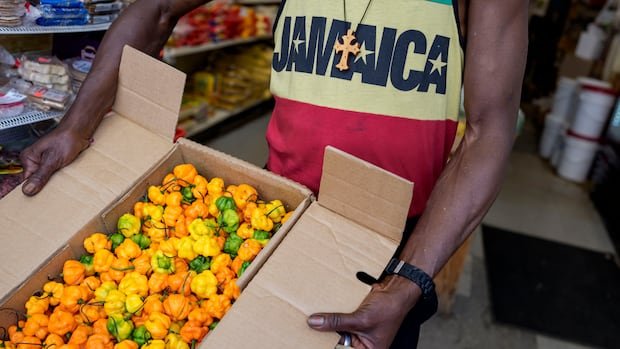

In a surprising turn of events for spice enthusiasts, there is a scarcity of Jamaican Scotch bonnet peppers. These fiery peppers play a crucial role in Jamaican cuisine, particularly in jerk seasoning and hot sauces, which are not only staples in Jamaica but also enjoy global popularity, including in Canada. Unfortunately, Scotch bonnets are challenging to cultivate due to their vulnerability to pests and diseases, leading to local supply disruptions. Moreover, recent adverse weather conditions in Jamaica, such as Hurricane Melissa in October, have further impacted the availability of Jamaican produce.
Sheldon Grant, a farmer from St. Catherine Parish, Jamaica, described Scotch bonnet cultivation as a delicate endeavor with significant potential but likened it to a gamble. Despite efforts by Grant and his wife, Shanice Bedward-Grant, to cultivate Scotch bonnets annually since establishing their farm, Nature Inspired Jamaica, in 2021, they have faced setbacks due to pest infestations, diseases, and the impact of natural disasters like Hurricane Beryl in 2024.
The scarcity of Scotch bonnet peppers has driven up prices, with reports indicating a surge in local market prices in Jamaica after the recent hurricane. In Toronto, retailers and distributors have highlighted the challenges and increased costs associated with sourcing Scotch bonnets, exacerbated by rising jet fuel prices affecting shipping expenses. Andy Narine, the owner of Tamisha Trading, a Caribbean produce distributor in Scarborough, Ontario, noted the overall expensive situation in Jamaica, reflecting the broader impact on the market.
Joannah Grant-Bailey, the owner of Caribbean Corner grocery store in Toronto, emphasized the doubling of Scotch bonnet prices over the past few years, making it a challenge for businesses to procure these peppers. Despite difficulties, Grant-Bailey’s store has managed to maintain its Scotch bonnet supply, attracting interest from restaurants and catering businesses seeking these sought-after peppers.
The scarcity of Scotch bonnets has also affected hot sauce makers, with potential implications for retail prices due to the unique flavor profile of these peppers. Sharna Davidson, the proprietor of Tata Hot Sauce, Take Out & Catering in Toronto, shared her firsthand experience of the scarcity, highlighting the distinctive qualities of authentic Jamaican Scotch bonnets and the challenges in sourcing them.
While the shortage of Scotch bonnet peppers may impact the availability and cost of certain hot sauces in Canada, experts suggest that a complete shortage is unlikely. Despite the ongoing challenges faced by farmers like Grant, who are striving to navigate the complexities of Scotch bonnet cultivation, efforts are underway to address the supply-demand imbalance and ensure a stable market for these prized peppers. Grant remains optimistic about the future, with plans to continue cultivating Scotch bonnets despite the uncertainties associated with production costs and environmental factors.
Overall, the shortage of Jamaican Scotch bonnet peppers underscores the intricate dynamics of global food supply chains and the resilience of farmers and businesses striving to meet consumer demand for unique and essential ingredients.