
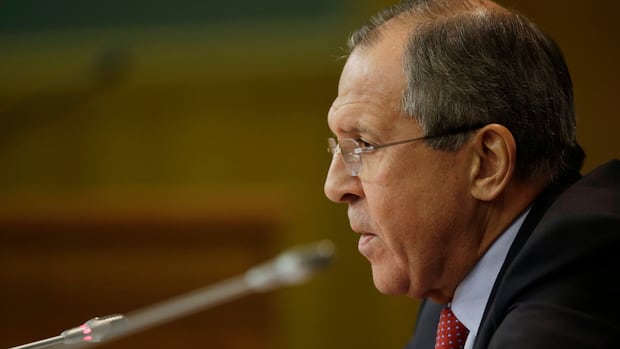

As NATO nations, including Canada, increase their military expenditures in the Arctic, a high-ranking official from the Kremlin has expressed that Russia perceives a threat from the region’s growing militarization.
“This kind of military presence in the Far North represents a direct danger to Russia’s security,” stated Sergei Lavrov, Russia’s foreign affairs minister, in an essay released on Monday via his department’s website.
“It also heightens the likelihood of incidents that could lead to armed conflict with potentially catastrophic outcomes.”
For many years, the Arctic was viewed as a zone of minimal international conflict, but the situation has evolved, and Lavrov’s essay is one of the most recent indicators of this shift, noted Alison LeClaire, a former Canadian ambassador to Russia and a past Senior Arctic Official at the intergovernmental Arctic Council.
“The Arctic landscape we once knew is becoming increasingly competitive. I interpret Lavrov’s letter as a signal indicating that it is not in our best interest to disengage from cooperation with them,” LeClaire remarked.
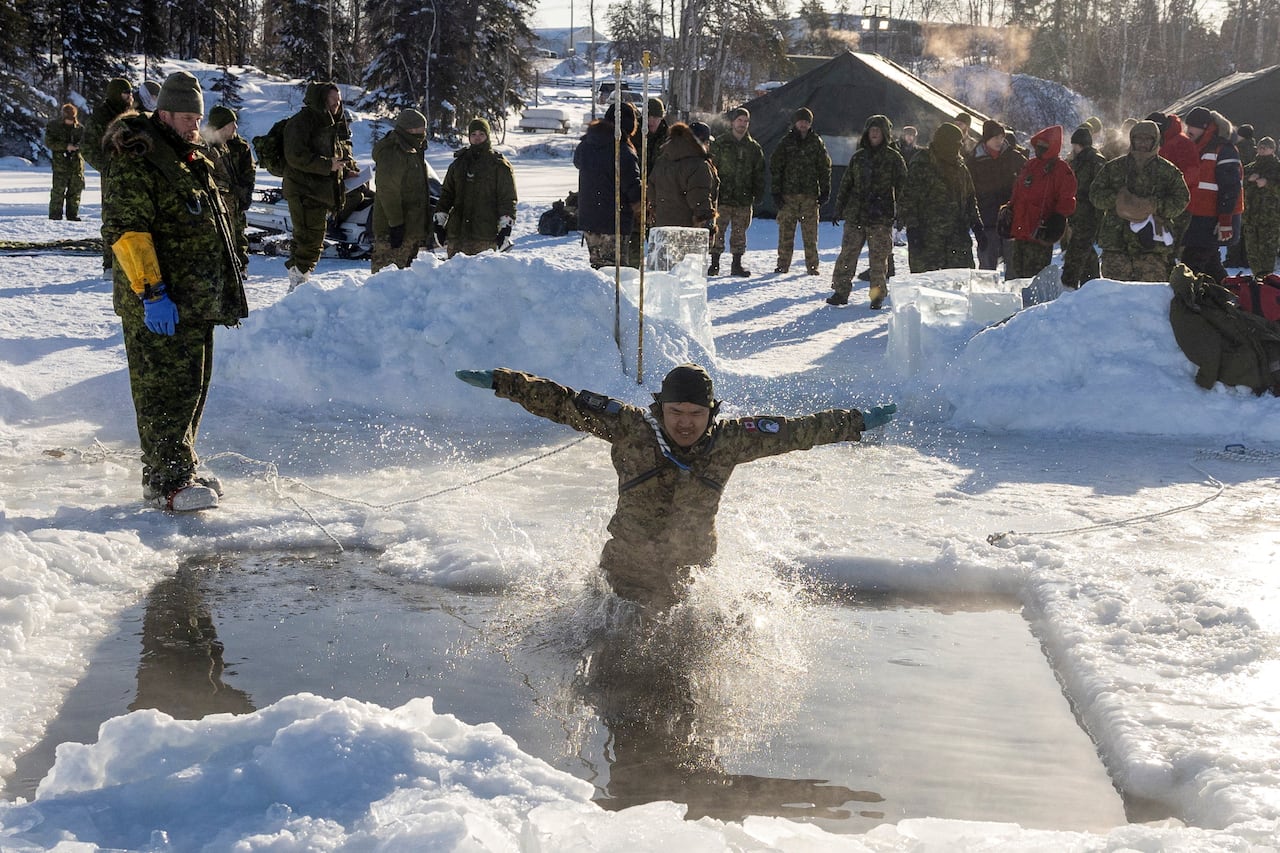
FILE PHOTO: A member of the 41 Canadian Brigade Group participates in an ice rescue drill as the Canadian Armed Forces engage in “Operation Nanook-Nunalivut,” an annual series of exercises aimed at demonstrating the military’s capacity to protect the Canadian Arctic, in Yellowknife, Northwest Territories, Canada February 20, 2026. REUTERS/Carlos Osorio/File Photo (Carlos Osorio/Reuters)
‘Qualified no’ on potential military threat from Russia
In 1987, Soviet leader Mikhail Gorbachev referred to the Arctic as a “zone of peace and cooperation.” However, as tensions between Russia and Western nations have escalated over time, the geopolitics of the Arctic have also transformed.
According to a Senate report from 2023 titled Arctic Security Under Threat, Canadian Armed Forces Maj.-Gen. Michael Wright identified Russia and China as the primary threats to Canada’s interests in the Arctic.
Additionally, a report from CSIS in 2024 indicated that Russian intelligence agencies have been engaged in “foreign interference activities” in the Arctic region of Canada.
But does Russia represent a military threat to Canada?
“My brief response would be a qualified no,” LeClaire stated.
The Russian Arctic contributes to at least 10 percent of the nation’s GDP, with over 2.5 million Russians residing in the area. Therefore, LeClaire argues that the Kremlin would not want to disturb the stability of the region.
“They have their Northern Fleet stationed there. They possess numerous assets in the area. Hence, engaging in military conflict in the Arctic would not align with their interests.”
Billions in Arctic defence could lead to ‘accidental conflict’
In 2024, the Canadian government announced an investment of $81 billion in Arctic defence over the course of 20 years. Following this, the government committed $32 billion for the enhancement of northern air force bases and $2.7 billion for seven Arctic operational support hubs and nodes.
In contrast, from 2014 to 2019, Russia established 14 airfields, six military bases, renovated 16 Soviet-era deepwater ports, and set up 10 border posts in the Arctic, as reported by the Arctic Institute, a U.S.-based think tank.
With the region’s increasing militarization, LeClaire pointed out that the possibility of unintentional incidents is growing.
“I believe the warning issued to NATO and its member states is that greater activity in the area increases the risk of accidental conflict.”